Expandable graphite (EG) is produced by inserting non-carbon atoms/molecules between flake graphite layers via grinding activation and chemical/electrochemical intercalation, creating graphite intercalation compounds (GICs) that expand dramatically when heated. Below is a detailed, step-by-step industrial process:
⚙️ Step 1: Raw Material Selection
Choose high-carbon natural flake graphite (94-99.9% C) with:
- Large flake size (0.15-5 mm): thicker flakes yield higher expansion ratios (200-300× vs. 50-100× for thin flakes)
- Low impurities (ash < 1%, Fe < 0.1%)
- Good crystallinity (high degree of graphitization)
🔧 Step 2: Grinding & Pretreatment (Activation)
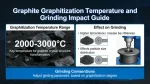
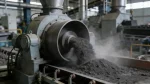
Grinding serves to increase surface area and create edge defects for easier intercalation, while avoiding excessive flake damage.
| Parameter | Optimal Settings | Purpose |
|---|---|---|
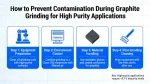
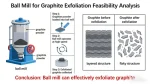
| Equipment | Planetary ball mill, jet mill, or high-pressure grinding rolls (HPGR) | HPGR preserves flake structure better than ball milling |
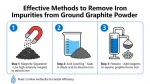
| Media | Zirconia/ceramic balls (6-10 mm diameter) | Avoid iron contamination |
| Speed | 300-500 rpm | Prevents over-grinding |
| Time | 1-4 hours | Creates surface defects without destroying layered structure |
| Ball-to-graphite ratio | 10:1 to 20:1 (w/w) | Ensures sufficient mechanical activation |
| Post-grinding | Sieving to 0.1-1 mm particle size | Controls uniformity for consistent intercalation |
Key Consideration: Mild grinding enhances intercalation efficiency, while severe grinding reduces expansion potential by breaking flakes into thinner pieces.
🧪 Step 3: Intercalation Process (Core Step)
Insert intercalants between graphite layers to form GICs. Chemical oxidation method is most widely used industrially.
Method A: Chemical Oxidation Intercalation (Standard Industrial Process)
-
Prepare intercalation solution:
- Intercalant: Concentrated sulfuric acid (98% H₂SO₄, most common), nitric acid, or perchloric acid
- Oxidant: Potassium permanganate (KMnO₄), hydrogen peroxide (H₂O₂ > 28%), or potassium dichromate (K₂Cr₂O₇)
- Additives: Ammonium nitrate (NH₄NO₃) as intercalation aid, glacial acetic acid for sulfur-free EG
-
Reaction conditions:
- Graphite:acid ratio = 1:4 to 1:10 (w/w)
- Oxidant:graphite ratio = 0.05:1 to 0.2:1 (w/w)
- Temperature = 20-60°C (ice bath for exothermic reactions)
- Stirring time = 1-4 hours (continuous mixing)
- Typical formulation: 100g graphite + 400ml H₂SO₄ + 15g KMnO₄ at 30°C for 2h
Method B: Mechanochemical Intercalation (Combines Grinding & Intercalation)
- Mix flake graphite with solid intercalant (e.g., NaHCO₃, FeCl₃) at 1:1 ratio
- Ball mill at 500 rpm for 4 hours (6mm stainless steel beads)
- Heat-treated at 200°C for 4 hours to complete intercalation
- Advantage: Reduces chemical waste, lower environmental impact
Method C: Electrochemical Intercalation (Green Alternative)
- Use graphite as anode in electrolytic cell with H₂SO₄ electrolyte
- Apply current density of 3 A/dm² at 0°C for 3 hours
- Graphite:acid ratio = 1:1.8 (w/w)
- Advantage: Higher purity (99.95% fixed carbon), lower chemical consumption
🚰 Step 4: Washing & Neutralization
- Dilute reaction mixture with ice water (1:5 ratio) to stop reaction
- Filter GICs using vacuum filtration or filter press
- Wash with:
- 5% HCl solution (to remove metal ions from oxidants)
- Deionized water until filtrate reaches pH 5-7 (critical for expansion performance)
- Avoid over-washing: Excessive water removes intercalants, reducing expansion ratio
🌡️ Step 5: Drying Process
- Temperature: 60-100°C (oven or spray drying)
- Time: 4-12 hours (until moisture content < 0.5%)
- Key: Avoid high temperatures (>120°C) which may cause premature expansion
- Result: Dry expandable graphite powder (GICs) ready for expansion
🔥 Step 6: Thermal Expansion (Optional for EG to Expanded Graphite)
To produce expanded graphite (worm-like material):
- Rapidly heat GICs to 800-1000°C (electric furnace, microwave, or infrared heating)
- Heating rate: >100°C/s (critical for maximum expansion)
- Expansion ratio: 50-300× original volume, forming “graphite worms”
- Mechanism: Intercalants vaporize/gasify, creating pressure to separate layers
📊 Key Performance Parameters
| Parameter | Target Value | Testing Method |
|---|---|---|
| Expansion ratio | 150-300 mL/g | ASTM D7372 |
| Onset expansion temp | 140-230°C | Thermal analysis |
| Fixed carbon | >98% | Combustion method |
| Moisture | <0.5% | Karl Fischer |
⚠️ Critical Process Controls
- Grinding intensity: Balance between surface activation and flake preservation
- Intercalant selection: Sulfuric acid gives highest expansion ratios, while perchloric acid produces sulfur-free EG
- Temperature control: Exothermic reactions must be cooled to prevent de-intercalation
- Washing efficiency: pH neutrality ensures stable expansion performance
🎯 Applications of Expandable Graphite
- Fire retardant additives (polymers, coatings, sealants)
- Thermal management materials (heat sinks, phase change composites)
- Environmental remediation (oil/water separation, dye adsorption)
- Gasket and sealing materials (after expansion and compression)