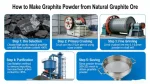
Making graphite powder from natural graphite ore involves a systematic process of extraction, beneficiation, grinding, purification, and classification. The exact steps vary slightly depending on the graphite ore type (flake, cryptocrystalline/amorphous, or massive), but the core process remains consistent.
⚙️ Core Process Overview
The complete industrial process can be broken down into 7 key stages:
| Stage |
Purpose |
Key Equipment |
| Mining & Extraction |
Retrieve raw graphite ore from underground deposits |
Drills, loaders, excavators |
| Crushing & Screening |
Reduce ore size and separate particles |
Jaw crusher, cone crusher, vibrating screen |
| Grinding & Liberation |
Free graphite flakes from gangue minerals |
Rod mill, ball mill, Raymond mill |
| Beneficiation |
Concentrate graphite (increase carbon content) |
Flotation cells, gravity separators |
| Purification |
Remove remaining impurities for high-purity applications |
Chemical leaching tanks, high-temperature furnaces |
| Drying & Classification |
Remove moisture and separate into particle sizes |
Rotary dryer, air classifier, cyclone separator |
| Packaging |
Store and transport final product |
Sealed bags, bulk containers |
Step-by-Step Process Details
1. Mining & Extraction
- Underground mining: Most common for high-grade flake graphite deposits
- Open-pit mining: Used for near-surface, lower-grade deposits
- Raw ore handling: Ore is transported to processing plant and sorted to remove large waste rocks
2. Crushing & Screening
- Primary crushing: Jaw crusher reduces ore to 150-200 mm pieces
- Secondary crushing: Cone crusher or impact crusher further reduces to 20-50 mm
- Screening: Vibrating screen separates particles by size; oversize returned for re-crushing
- Hand sorting (for high-grade ores): Used for cryptocrystalline graphite with 60-80% carbon content
3. Grinding & Liberation
- Objective: Achieve particle size where graphite flakes are separated from gangue (quartz, mica, clay)
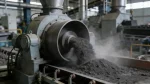
- Rod mill: Preferred for flake graphite to minimize flake damage
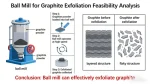
- Ball mill: Used for finer grinding of all graphite types
- Raymond mill/vertical roller mill: For ultra-fine grinding applications
- Grinding density: Maintained at 40-65% solids for optimal efficiency
- Liberation check: Microscopic analysis ensures graphite particles are free from gangue
4. Beneficiation (Concentration)
Flotation Process (Most widely used for flake graphite)
- Slurry preparation: Ground ore mixed with water to form 25-35% solids slurry
- Reagent addition:
- Collectors: Kerosene, diesel oil, or pine oil make graphite hydrophobic
- Foaming agents: Methyl isobutyl carbinol (MIBC), No.2 oil stabilize bubbles
- pH regulators: Lime or sulfuric acid adjust to 8-10 (optimal for graphite)
- Flotation cells: Air bubbles introduced; graphite adheres and floats to surface
- Froth collection: Concentrate (60-90% carbon) collected; tailings discarded
- Multi-stage flotation: Roughing → cleaning (2-3 stages) → scavenging improves purity
Gravity Separation (Alternative for some ores)
- Used for ores with heavy mineral impurities
- Centrifugal concentrators or shaking tables separate based on density difference
- Effective for removing pyrite and other sulfide minerals
5. Purification (For high-purity applications >99.9%)
| Purification Method |
Process |
Purity Achieved |
Applications |
| Chemical Leaching |
HF/HCl/H₂SO₄ dissolve silicate/aluminate impurities |
99.9%+ |
Battery materials, electronics |
| Alkali-Acid Process |
NaOH fusion followed by acid leaching |
99.9% |
High-purity industrial uses |
| High-Temperature |
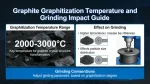
2800-3000°C in inert atmosphere vaporizes impurities |
99.99% |
Nuclear, aerospace |
| Electrostatic Separation |
Separates conductive graphite from non-conductive gangue |
95-98% |
Preliminary purification |
6. Drying & Classification
- Drying:
- Rotary dryer (120-150°C) removes moisture to <1%
- Flash dryer for fine powders to prevent agglomeration
- Classification:
- Air classifier separates particles by size (50 mesh to 5000 mesh)
- Cyclone separator collects fine particles
- Oversize particles returned to grinding mill
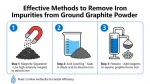
- Magnetic separation: Optional step to remove iron impurities
7. Packaging & Storage
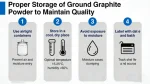
- Final graphite powder packed in moisture-proof bags (25kg, 50kg) or bulk containers
- Stored in dry, well-ventilated area away from chemicals and moisture
- Labeled with particle size distribution, carbon content, and purity level
Ore-Specific Process Variations
Flake Graphite Processing
- Emphasis on flake protection during grinding (use rod mills)
- Multi-stage flotation to preserve flake size and increase carbon content to 85-98%
- Flake size classification (large, medium, small) for different applications
Cryptocrystalline (Amorphous) Graphite Processing
- Higher initial carbon content (60-80%) allows simpler process
- Often skips flotation; only crushing, grinding, and drying needed
- Used for lower-value applications like refractory materials and brake linings
Massive Graphite Processing
- Similar to flake graphite but with larger particle sizes
- Hand selection often sufficient for initial concentration
Quality Control Parameters
| Parameter |
Typical Specification |
Testing Method |
| Carbon content |
85-99.99% |
Combustion analysis, LECO analyzer |
| Particle size |
50-5000 mesh |
Laser diffraction, sieve analysis |
| Moisture content |
<1% |
Karl Fischer titration |
| Ash content |
0.01-15% |
Combustion at 800°C |
| Impurity levels |
Fe < 500 ppm, S < 100 ppm |
ICP-MS, XRF |
Key Equipment Selection Guide
| Process Stage |
Equipment Type |
Best For |
| Primary crushing |
Jaw crusher |
All ore types, high capacity |
| Secondary crushing |
Cone crusher |
Flake graphite, minimal fines |
| Grinding |
Rod mill |
Flake graphite (flake protection) |
| Grinding |
Ball mill |
All types, fine grinding |
| Grinding |
Raymond mill |
Ultra-fine powder production |
| Beneficiation |
Flotation cells |
Flake graphite concentration |
| Classification |
Air classifier |
Precise particle size control |
Safety & Environmental Considerations
- Dust control: Use baghouses and ventilation systems to prevent graphite dust inhalation
- Chemical safety: Proper handling of HF, HCl, and other acids during purification
- Wastewater treatment: Flotation reagents must be removed before discharge
- Energy efficiency: High-temperature purification requires significant energy; consider heat recovery systems
The production of graphite powder from natural ore requires balancing efficiency, purity, and flake preservation (for flake graphite). While small-scale production is possible, industrial operations use specialized equipment to achieve consistent quality and high yields. The final product can be used in batteries, lubricants, refractories, pencils, and many other applications depending on its particle size and purity level.