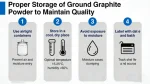
To maintain the quality of ground graphite powder, focus on controlling moisture, preventing oxidation, avoiding contamination, and managing physical degradation (agglomeration, particle size changes). Below is a structured approach to proper storage:
1. Core Storage Principles
Ground graphite is porous (7%-13% porosity), adsorbs moisture easily, and can oxidize at elevated temperatures. Key priorities:
- Moisture control: Prevent clumping, conductivity loss, and oxidation acceleration
- Oxidation prevention: Critical for high-purity graphite (≥99.9%)
- Contamination avoidance: Preserve purity for specialized applications (batteries, electronics)
- Physical stability: Maintain particle size distribution and flow properties
2. Container Selection & Packaging
| Container Type | Best For | Key Features |
|---|---|---|
| Airtight drums/bins | Bulk storage | Sealed lids, moisture barrier, stackable |
| Double-layer bags | Small-medium quantities | PET/AL/PE composite: aluminum foil blocks light/gases, PE provides seal |
| Vacuum-sealed bags | High-purity applications | Residual oxygen ≤0.5%, ideal for ≥99.9% purity |
| Desiccator jars | Laboratory use | Silica gel desiccant, airtight seal, prevents moisture absorption |
| Inert gas containers | Ultra-high purity | Nitrogen/argon-filled (0.05MPa micro-positive pressure) to eliminate oxidation risk |
Packaging best practices:
- Use clean, non-reactive containers (avoid copper, iron, or reactive metals)
- Add food-grade silica gel desiccant packs inside containers
- Heat-seal bags instead of just folding to ensure airtightness
- For multi-use containers, replace seals/gaskets regularly to maintain integrity
3. Environmental Conditions (Critical!)
Temperature
- Optimal range: 15-25°C (59-77°F)
- Avoid: <0°C (freezing) or >40°C (high temperature)
- Rationale: High temps accelerate oxidation; low temps can cause moisture condensation; extreme fluctuations promote clumping
Humidity
- Maximum safe level: 60% RH (relative humidity)
- Recommended range: 40-60% RH for general storage; <50% RH for battery-grade graphite
- Control methods:
- Install industrial dehumidifiers in storage areas
- Use electronic humidity monitors with alarms
- Place desiccant packs in storage cabinets and containers
Storage Location Requirements
- Indoor, climate-controlled space only (never outdoors)
- Well-ventilated to prevent dust accumulation and potential fire risk
- Away from: direct sunlight, heat sources, oxidizing agents, and incompatible materials
- Layout:
- Shelves 30cm+ from walls, 15cm+ above floor (prevents moisture wicking)
- Avoid over-stacking (crushing risk, container damage)
- Separate different grades/sizes of graphite powder (prevent cross-contamination)
4. Handling & Operational Practices
- Clean tools only: Use dedicated, non-shedding utensils (polymer-tipped or stainless steel)
- Minimize exposure: Work quickly when opening containers; avoid leaving powder uncovered
- Static protection: Ground containers and use anti-static equipment (graphite dust is conductive but can generate static)
- PPE: Wear powder-free gloves, dust masks, and protective clothing to prevent contamination from skin oils and hair
- First-in, first-out (FIFO): Rotate stock to use oldest material first
- Avoid temperature shock: Allow containers to acclimate to room temperature before opening (prevents condensation)
5. Application-Specific Storage Guidelines
| Application | Special Requirements |
|---|---|
| Lithium-ion battery anodes | Ultra-dry conditions (<0.1% moisture), vacuum-sealed with argon, stored in glove boxes for long-term use |
| Lubricants | Store away from oils, greases, and solvents; maintain particle size distribution to preserve lubricity |
| Electronics/conductive materials | High-purity storage (avoid metal contamination), control moisture to prevent conductivity loss |
| Industrial additives | Focus on preventing agglomeration; use anti-caking agents if compatible with end use |
| Laboratory/research | Store in desiccators with humidity indicators; avoid cross-contamination with other chemicals |
6. Quality Inspection & Maintenance
- Regular checks: Inspect for clumping, discoloration, or foreign particles monthly
- Moisture testing: Use Karl Fischer titration quarterly to verify moisture content (<0.5% ideal)
- Container integrity: Check seals, lids, and packaging for damage weekly
- Shelf life:
- Unopened, properly stored graphite: indefinite shelf life under ideal conditions
- Opened containers: Use within 6 months (colloidal graphite) to 1 year (general purpose)
- High-purity graphite: Use within 3-6 months after opening, even if resealed
7. Emergency & Safety Considerations
- Fire risk: Graphite dust is combustible; store away from ignition sources and maintain good housekeeping
- Incompatible materials: Keep at least 3m away from oxidizers (nitrates, peroxides), strong acids, and alkalis
- Spill response: Use inert absorbents (sand, vermiculite); avoid water (may cause clumping)
Quick Reference Checklist
✅ Store in airtight containers with desiccant
✅ Maintain 15-25°C, 40-60% RH
✅ Keep away from heat, sunlight, and oxidizers
✅ Use clean tools and minimize exposure time
✅ Rotate stock (FIFO)
✅ Inspect regularly for moisture and contamination
✅ For high-purity graphite: consider vacuum packaging or inert gas storage
By following these guidelines, you can preserve the physical and chemical properties of ground graphite powder, ensuring consistent performance in your applications.