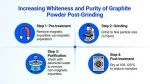
Increasing thewhiteness(brightness) andpurity(fixed carbon content) of graphite powder after grinding is a critical challenge, especially for high-value applications like lithium-ion battery anodes, conductive coatings, and refractories.
Here is a comprehensive technical guide:
1. Prevent Contamination During Grinding (Source Control)
The first step is ensuring the grinding process itself does not lower the purity or whiteness.
●Use Non-Metallic Liners and Media:
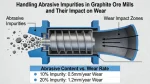
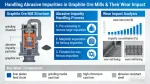
○Problem:Standard steel liners and grinding media (balls/rollers) introduce iron (Fe) contamination, turning the powder gray/black and lowering purity.
○Solution:UseCeramic (Alumina/Zirconia),Silicon Carbide, orPolyurethaneliners and grinding media. For ultra-high purity, useGraphite-on-Graphitemilling where the grinding elements are made of high-purity graphite.
●Air Classification Optimization:
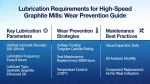
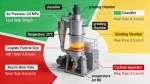
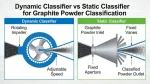
○Ensure the air classifier is tuned correctly to separate fine particles from coarse ones efficiently. Over-grinding can generate excessive heat, causing oxidation (darkening) of the surface.
●Temperature Control:
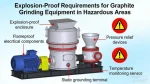
○Excessive heat during grinding can oxidize the graphite surface. Use mills with effective cooling systems or cryogenic grinding (liquid nitrogen) for sensitive applications to prevent thermal degradation.
2. Chemical Purification Methods (Post-Grinding)
This is the most effective way to increase fixed carbon content (from ~90% to 99.9%) and improve whiteness by removing mineral impurities (silica, feldspar, pyrite).
A. Alkali Acid Method (Most Common for High Purity)
This is the industry standard for producing battery-grade graphite.
1.Alkali Roasting:Mix the ground graphite powder with solid NaOH (Sodium Hydroxide) and roast at500°C – 800°C. This converts silicate impurities into soluble sodium silicates.
○Reaction:SiO₂+2NaOH→Na₂SiO₃+H₂O
2.Water Washing:Wash the roasted material with hot water to remove the soluble silicates.
3.Acid Leaching:Treat the residue with hydrochloric acid (HCl) or hydrofluoric acid (HF) at elevated temperatures. This dissolves remaining metal oxides (Fe, Al, Ca, Mg).
○Result:Can achieve99.9% – 99.95%fixed carbon.
4.Final Washing & Drying:Wash until neutral pH and dry carefully.
B. Hydrofluoric Acid (HF) Method
●Process:Directly leach the ground graphite with HF acid. HF is exceptionally good at dissolving silica (SiO2SiO_2SiO2), which is the main cause of low whiteness.
●Pros:Very high efficiency; can reach99.99%purity.
●Cons:Highly toxic, requires strict environmental controls and specialized equipment (PTFE-lined reactors).
C. Chlorination Roasting
●Process:Mix graphite with a chlorinating agent (e.g., CaCl₂, NaCl) and roast at1000°C+in a chlorine gas atmosphere. Impurities are converted to volatile chlorides and evaporate.
●Application:Used for ultra-high purity (>99.99%) required in nuclear or semiconductor industries.
3. Physical Purification Methods
These methods are often used as pre-treatment before chemical purification or for moderate purity requirements.
A. High-Temperature Purification (Graphitization)
●Process:Heat the graphite powder to2500°C – 3000°Cin an inert atmosphere (Argon/Nitrogen).
●Mechanism:At these temperatures, almost all non-carbon impurities volatilize or decompose.
●Result:Achieves the highest possible purity (99.999%) and significantly improves crystallinity (which can enhance brightness/luster).
●Cost:Very energy-intensive.
B. Froth Flotation (Usually Pre-Grinding, but applicable to coarse grind)
●If the grinding is not ultra-fine (<10 microns), re-floating the product can help. Fine grinding often makes flotation difficult because particles become too small to attach to bubbles.
●Tip:If purity is low after grinding, considerre-grinding in stageswith flotation between stages rather than one single fine grind.
C. Magnetic Separation
●High-Intensity Magnetic Separators (HIMS):Use wet or dry high-intensity magnetic separators to remove paramagnetic impurities like Iron (Fe), Titanium (Ti), and Hematite.
●Impact:Directly improves whiteness by removing dark metallic specks.
4. Surface Modification & Coating (To Enhance Whiteness)
Sometimes the bulk purity is high, but the surface appears dull or gray due to surface defects or oxidation.
●Surface Oxidation Removal:Mild acid washing can remove the amorphous, oxidized layer on the particle surface, revealing the shiny crystalline structure underneath.
●Organic Coating:Coating particles with specific organic agents (e.g., stearic acid, silanes) during the final mixing stage can improve dispersion and optical properties (making it appear “blacker” or more uniform in composites, though this doesn’t increase chemical purity).
●Note on “Whiteness”:Pure graphite is naturallymetallic gray/black. It does not become “white” like kaolin or talc.
○If your goal ishigh brightness/luster: Focus on removing iron and silica (which look dull/white/gray) to reveal the metallic shine of the carbon.
○If you literally needwhite powder: Graphite cannot be made white. You may be looking forWhite Carbon Black(Silica) or confused withMica/Talc. If you need a light-colored conductive filler, considerCarbon Nanotubes
or specialized coated fillers, but natural graphite will always be dark.
5. Step-by-Step Optimization Plan
| Step | Action | Expected Outcome |
|
1
|
Switch to Ceramic/Graphite Liners
|
Prevents Fe contamination; maintains initial purity. |
|
2
|
Install High-Intensity Magnetic Separator
|
Removes free iron and weakly magnetic minerals; improves visual cleanliness. |
|
3
|
Alkali Roasting (500-800°C)
|
Breaks down silicate lattices; prepares for acid leaching. |
|
4
|
Acid Leaching (HCl/HF)
|
Dissolves metal oxides and silica; boosts Fixed Carbon to >99.9%. |
|
5
|
Ultra-Pure Water Washing
|
Removes residual acids and salts; prevents re-contamination. |
|
6
|
High-Temp Treatment (Optional)
|
Volatilizes remaining trace impurities; maximizes crystallinity. |
|
7
|
Controlled Drying
|
Prevents oxidation during the final drying phase. |
Key Metrics to Monitor
Summary Recommendation
If you are currently grinding and getting gray/dull powder:
1.Check your mill lining:If it’s steel, switch to ceramic immediately.
2.Add a magnetic separation stageafter grinding.
3.Implement a chemical purification line(Alkali-Acid method) if you need >99% purity. Mechanical grinding alonecannotachieve high chemical purity.