Bulk density = loose packing density (before tapping).
Higher bulk density = better flow, less dust, less bridging, easier transportation.
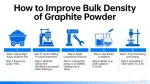
1. Optimize Particle Size Distribution (Most Effective)
- Use wide particle size distribution (large + medium + small particles).Small particles fill gaps between large ones → higher packing density.
- Reduce ultra-fine powder (<3 μm) content.Too many fines cause agglomeration and increase voids → low bulk density.
2. Improve Particle Shape
- Spheroidize graphite particles (turn flake → spherical).Spherical particles pack much denser than flaky / irregular ones.
- Smooth surfaces reduce friction → better flow and higher bulk density.
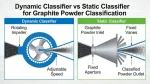
3. Remove Excess Fines with Air Classification
Use an air classifier to remove light, fine powder.Less fine dust → less agglomeration → higher bulk density.
4. Avoid Over-Grinding
Over-grinding creates massive amounts of ultra-fine particles,which lower bulk density drastically.Control grinding speed and circulation to keep a stable particle size.
5. Reduce Moisture & Agglomeration
- Dry graphite powder properly (residual moisture < 0.5%).Moisture causes clumping → loose packing.
- Eliminate static electricity to prevent agglomeration.
6. Light Surface Modification (Low Dosage)
Add a tiny amount of lubricant/modifier (e.g., stearic acid, graphite-specific modifier):
- reduces inter-particle friction
- improves flow
- increases bulk density
7. Gentle Granulation (For Very Poor Flow)
Make micro-granules (soft, not hard pellets) to:
- eliminate dust
- greatly improve bulk density
- make conveying / feeding much smoother
By combining classification + shape control + removing fines,you can often increase bulk density by 20–40%.