
Equipment
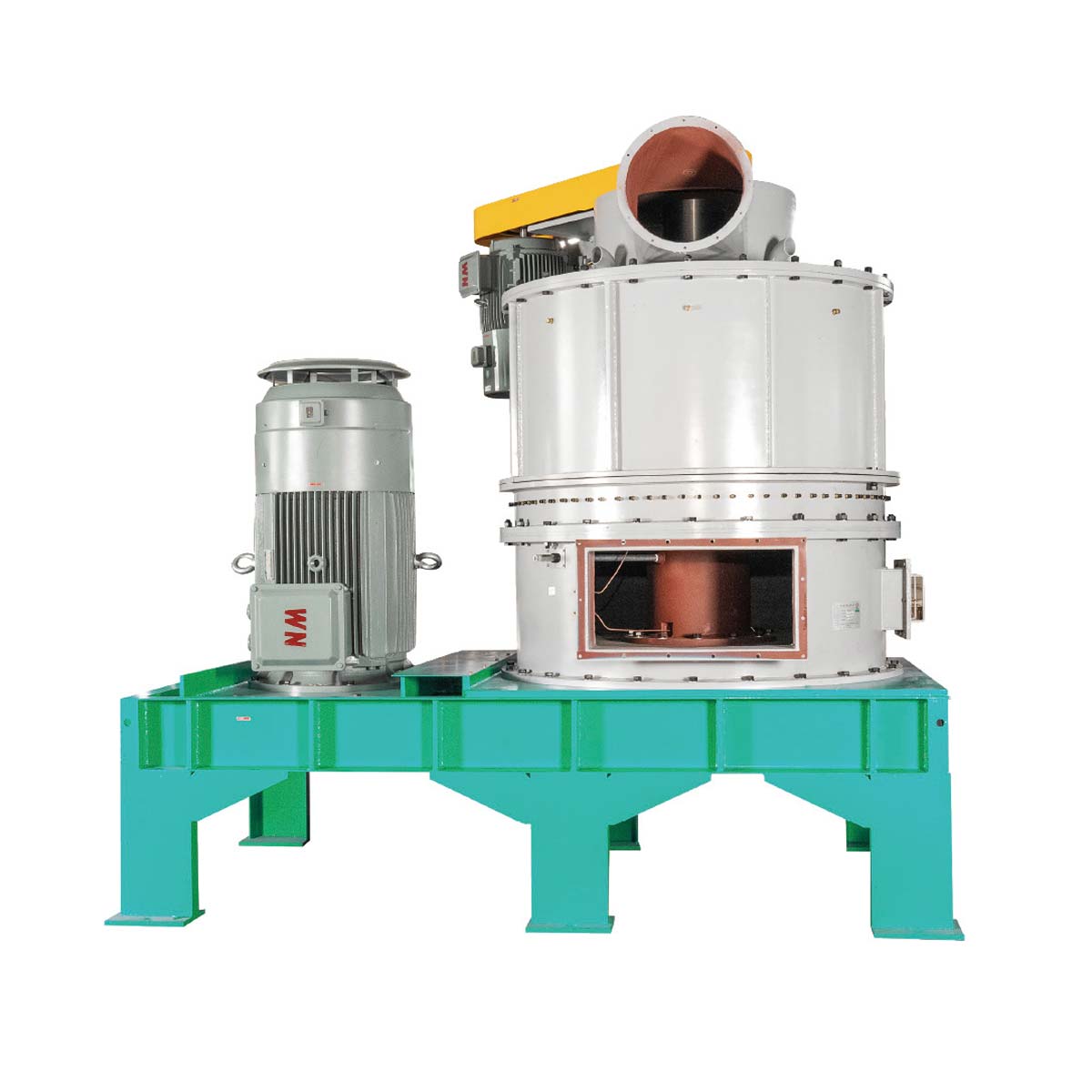
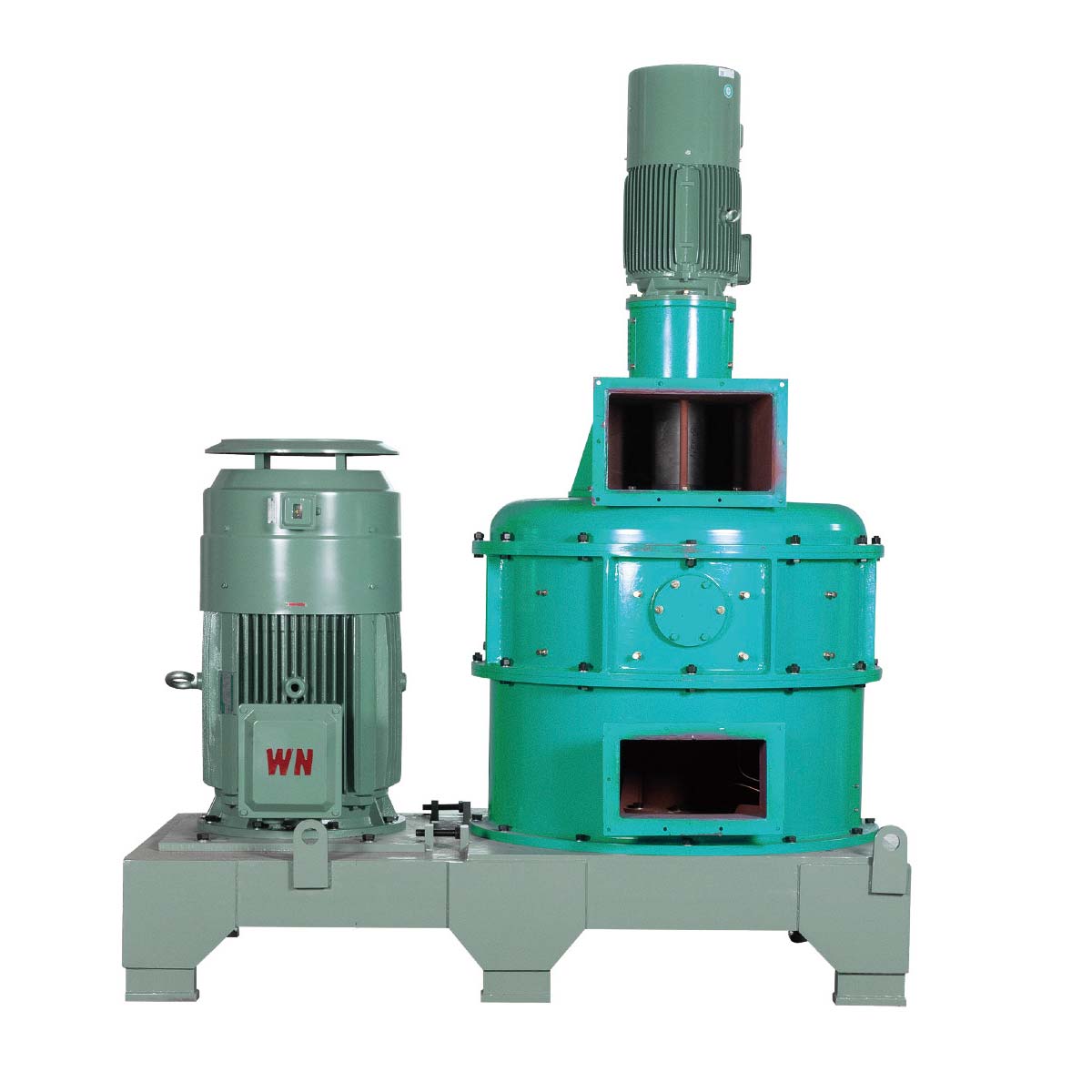
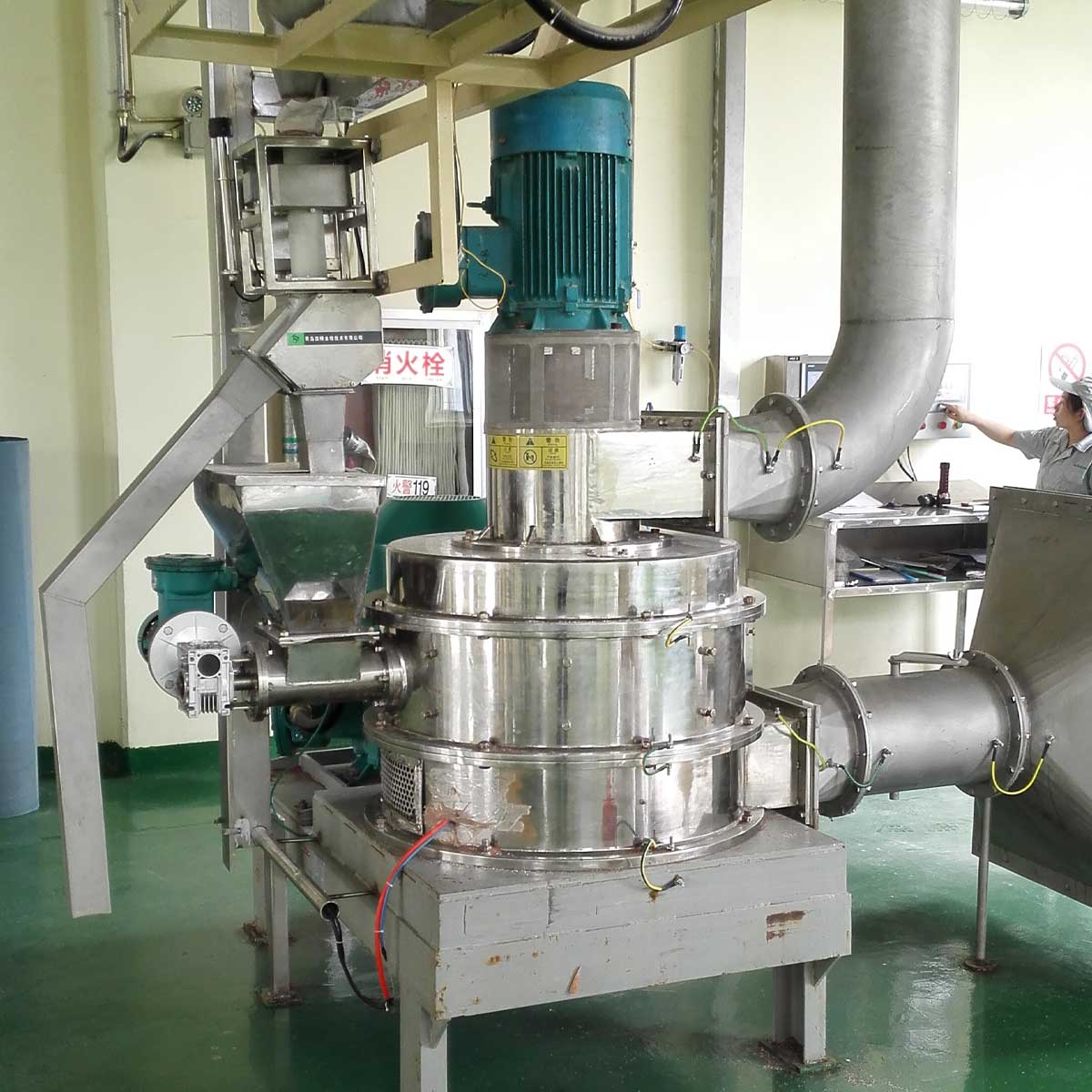
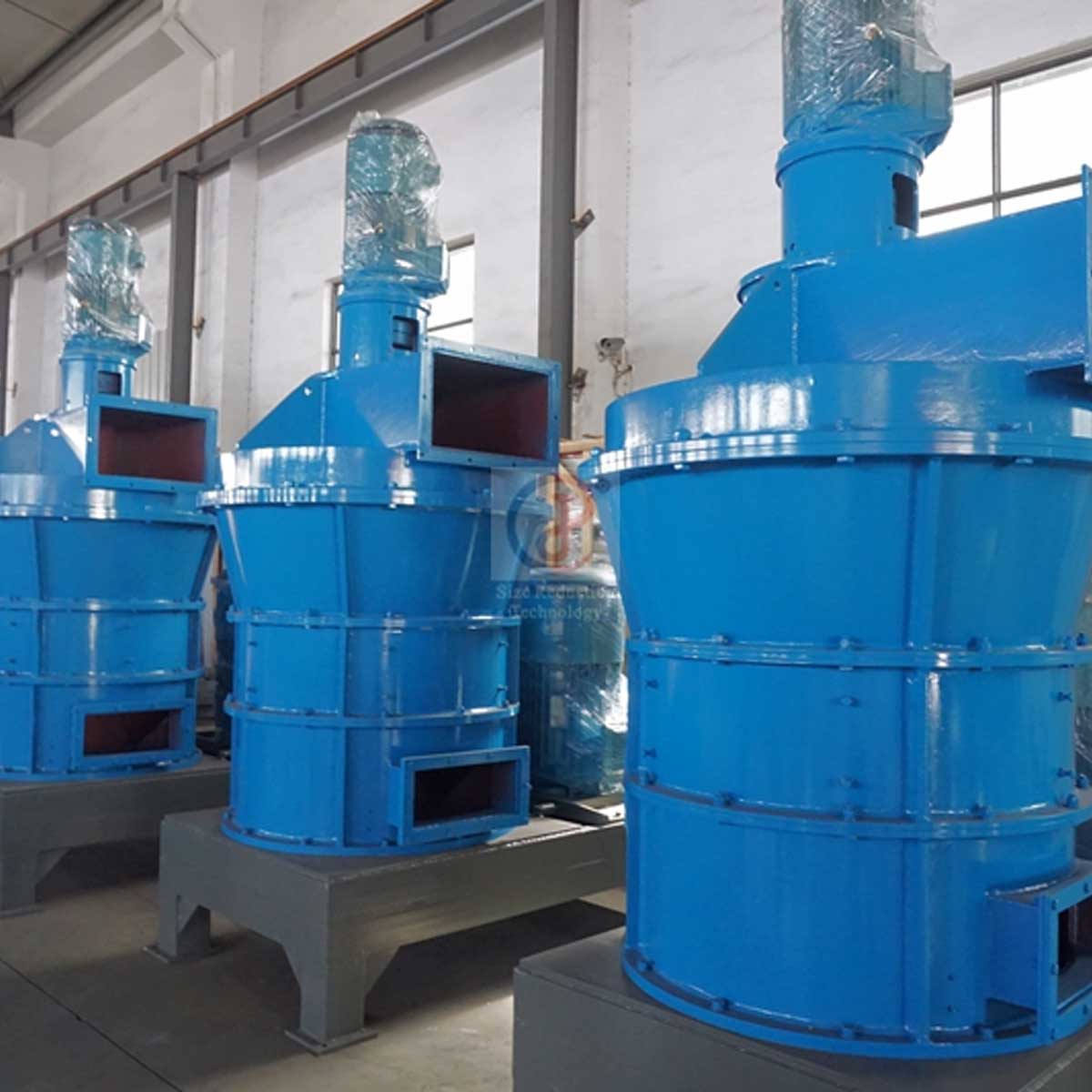
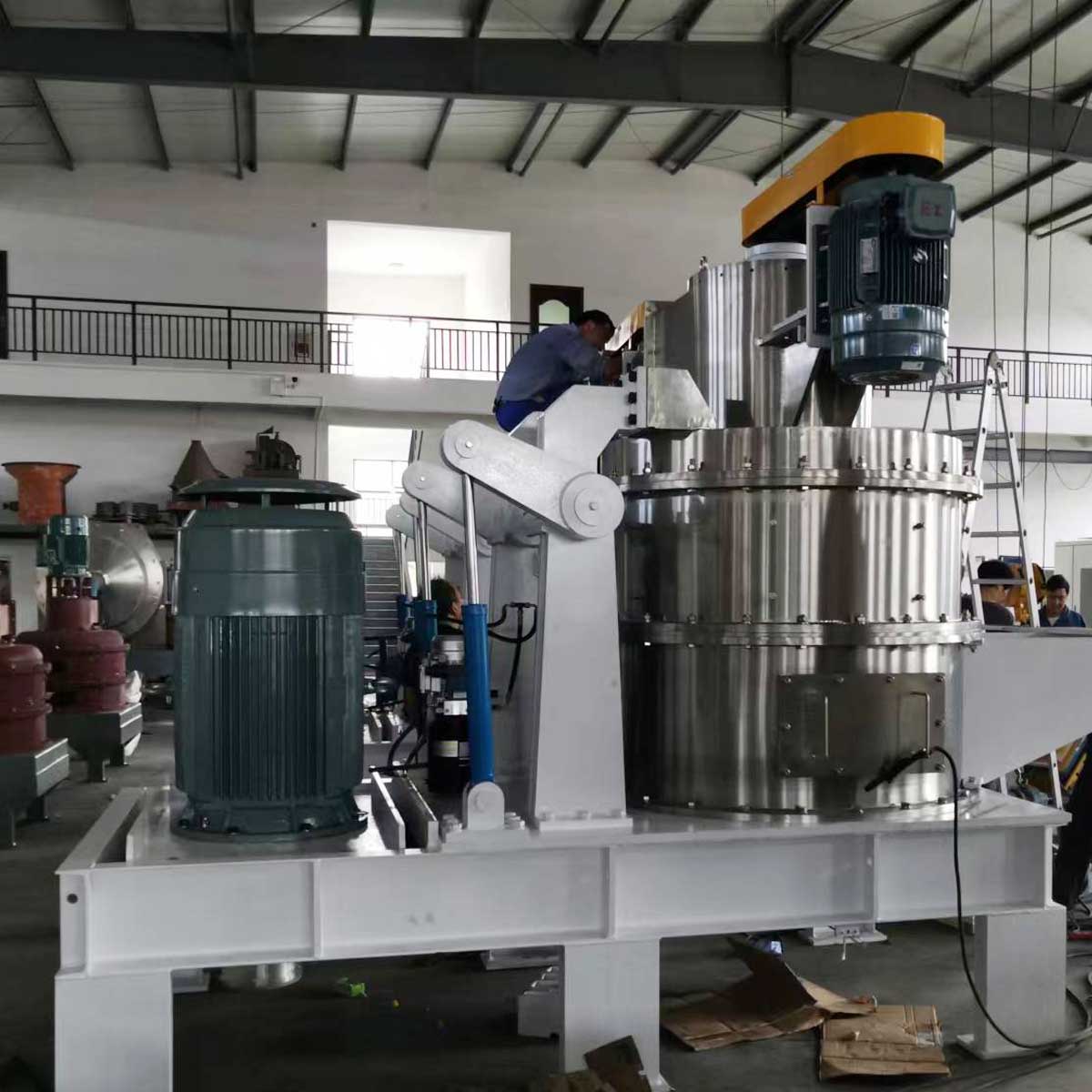
Split-Axis Vertical Classifier Mill
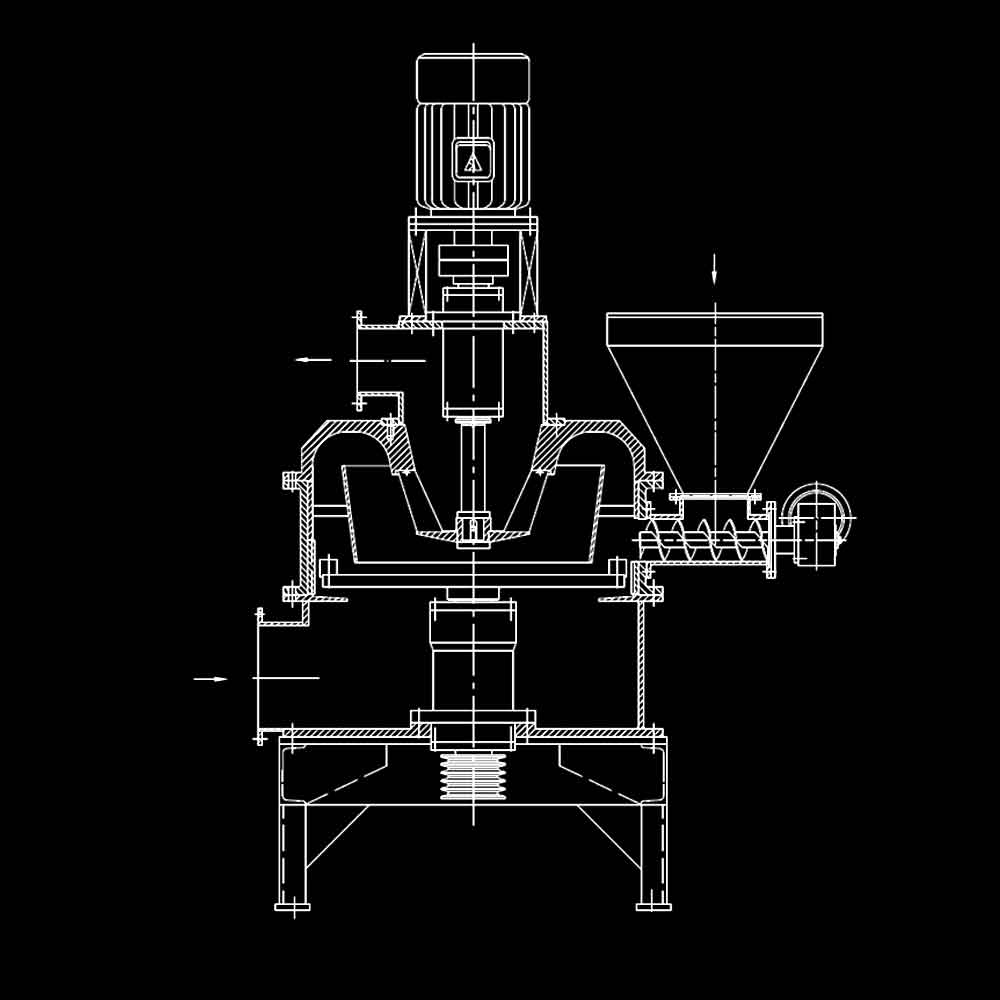
Classic internal classification mill with dual functions of ultra-fine grinding and classification, featuring a wide application range and outstanding cost performance. The lower part of the equipment is an ultra-fine grinding unit, and the upper part is a matching ultra-fine classification unit. The integrated design efficiently meets various powder processing requirements.
Materials are accurately fed to the outer edge of the grinding disc by a screw feeder, and gain high-speed acceleration driven by the grinding blocks. In the closed grinding zone formed by the grinding disc and the gear ring, sufficient grinding is achieved through mutual collision between materials. After grinding, the materials are driven by the ascending air flow to enter the upper classification zone. Qualified fine powders with reaching the standard particle size are quickly discharged through the classifier wheel, while unqualified coarse particles naturally fall back to the grinding zone along the inside of the splitter ring to participate in grinding again, ensuring the finished product has a uniform and up-to-standard particle size.
Equipment
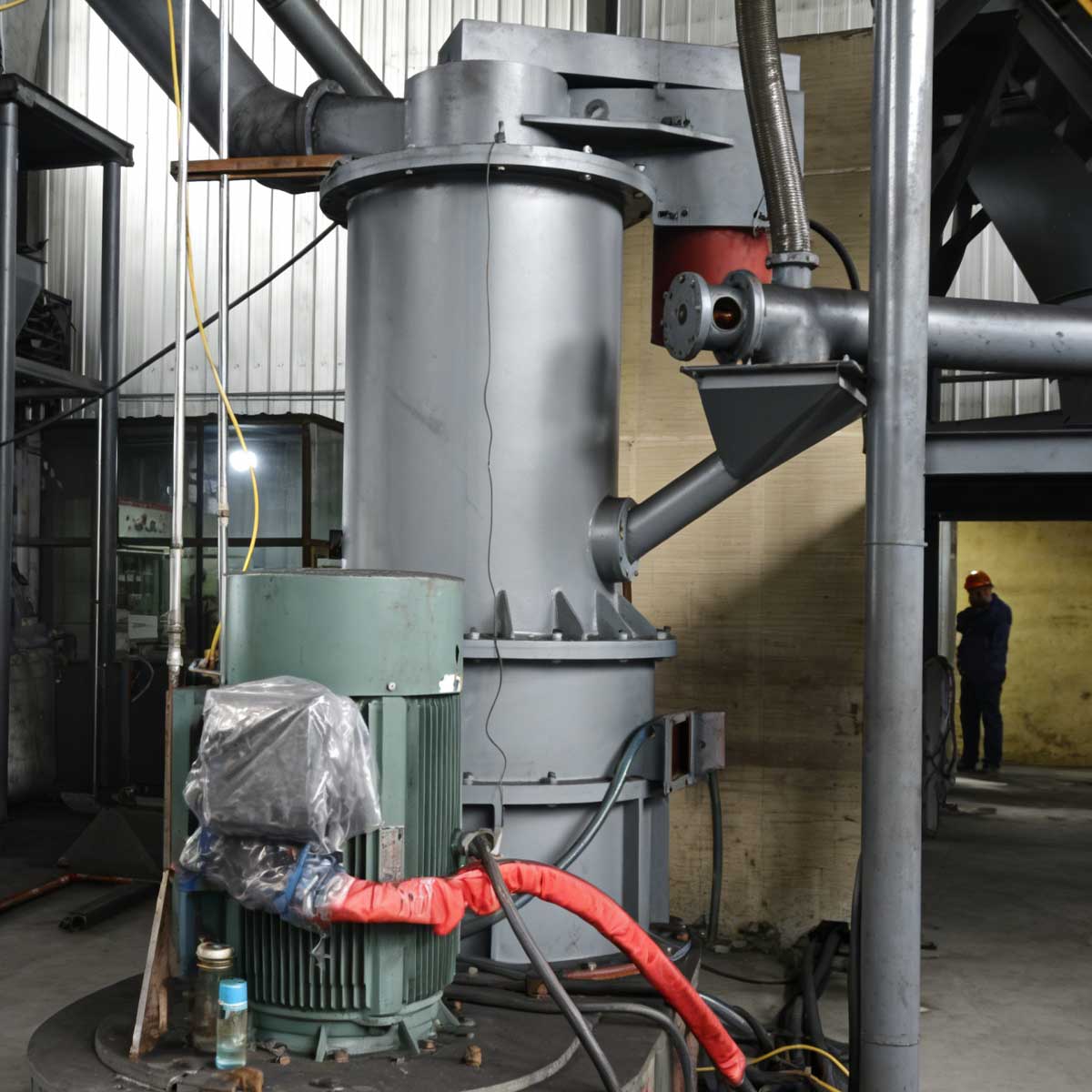
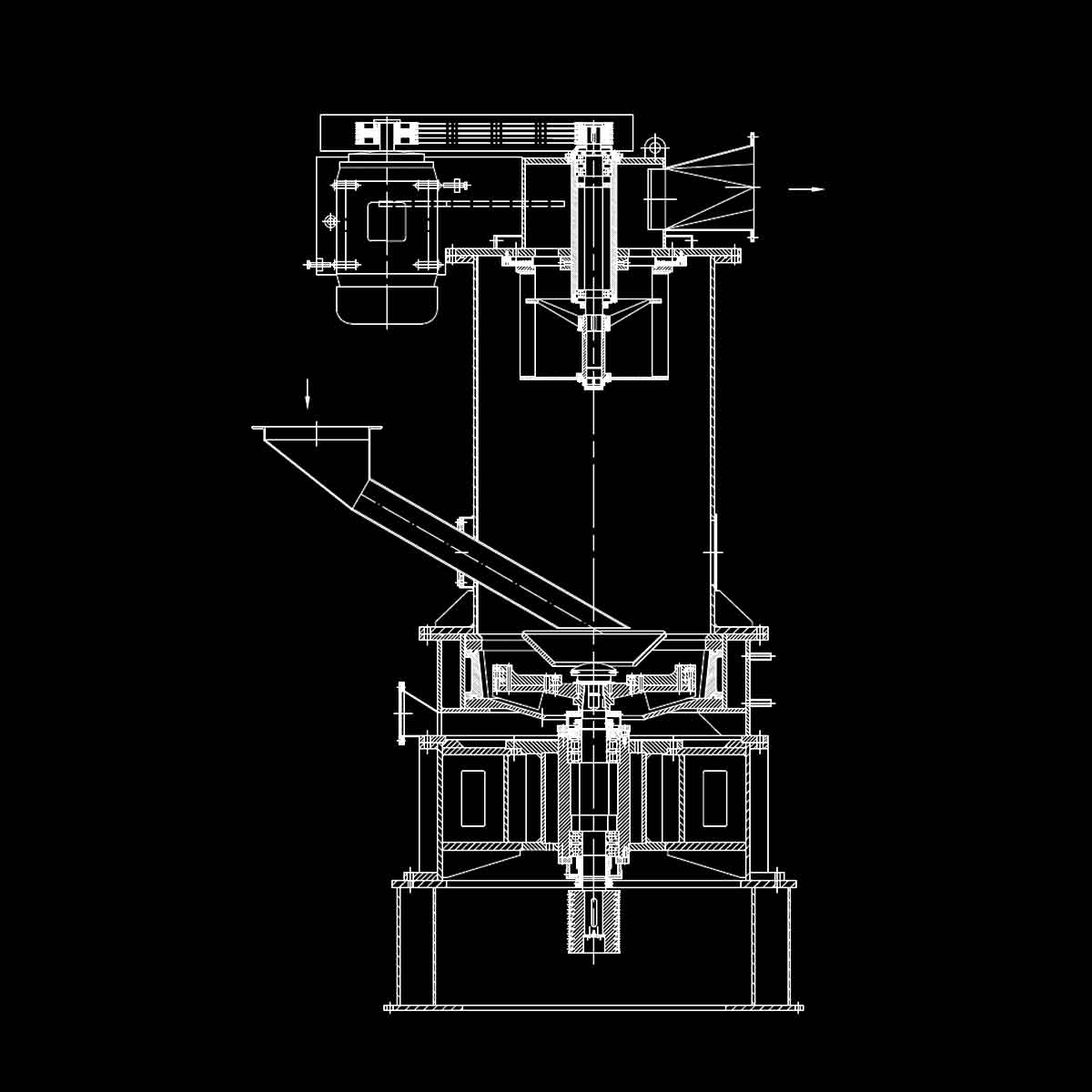
Split-Axis Vertical Classifier Mill - Elevated Type
The lower part is an ultra-fine grinder, and the upper part is an ultra-fine classifier. The integrated design combines the dual functions of grinding and classification.
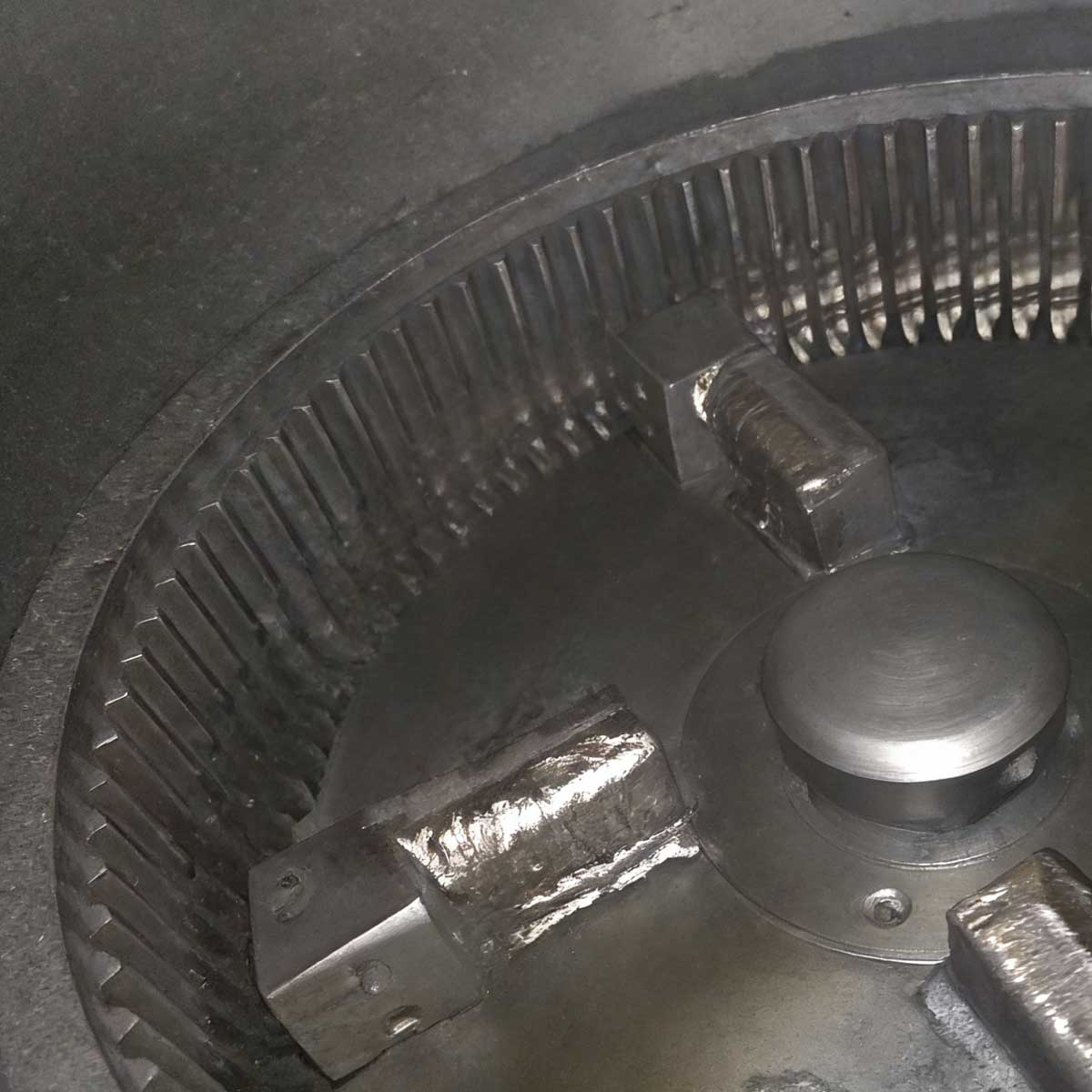
Materials are fed into the center of the grinding disc by a screw feeder, driven by the evenly distributed grinding blocks on the disc to disperse outward uniformly and gain acceleration. After colliding and grinding with each other in the grinding zone composed of the grinding disc and the gear ring, the materials enter the classification zone with the ascending air flow. Qualified fine powders are discharged through the classifier wheel, while coarser particles fall back to the grinding zone for further grinding.
The equipment enables materials to obtain greater kinetic energy, capable of producing finer powders. With a sufficient length of the ascending zone, it achieves excellent moisture evaporation effect, and the maximum particle size Dmax of the finished product can be accurately controlled with ease.
Equipment
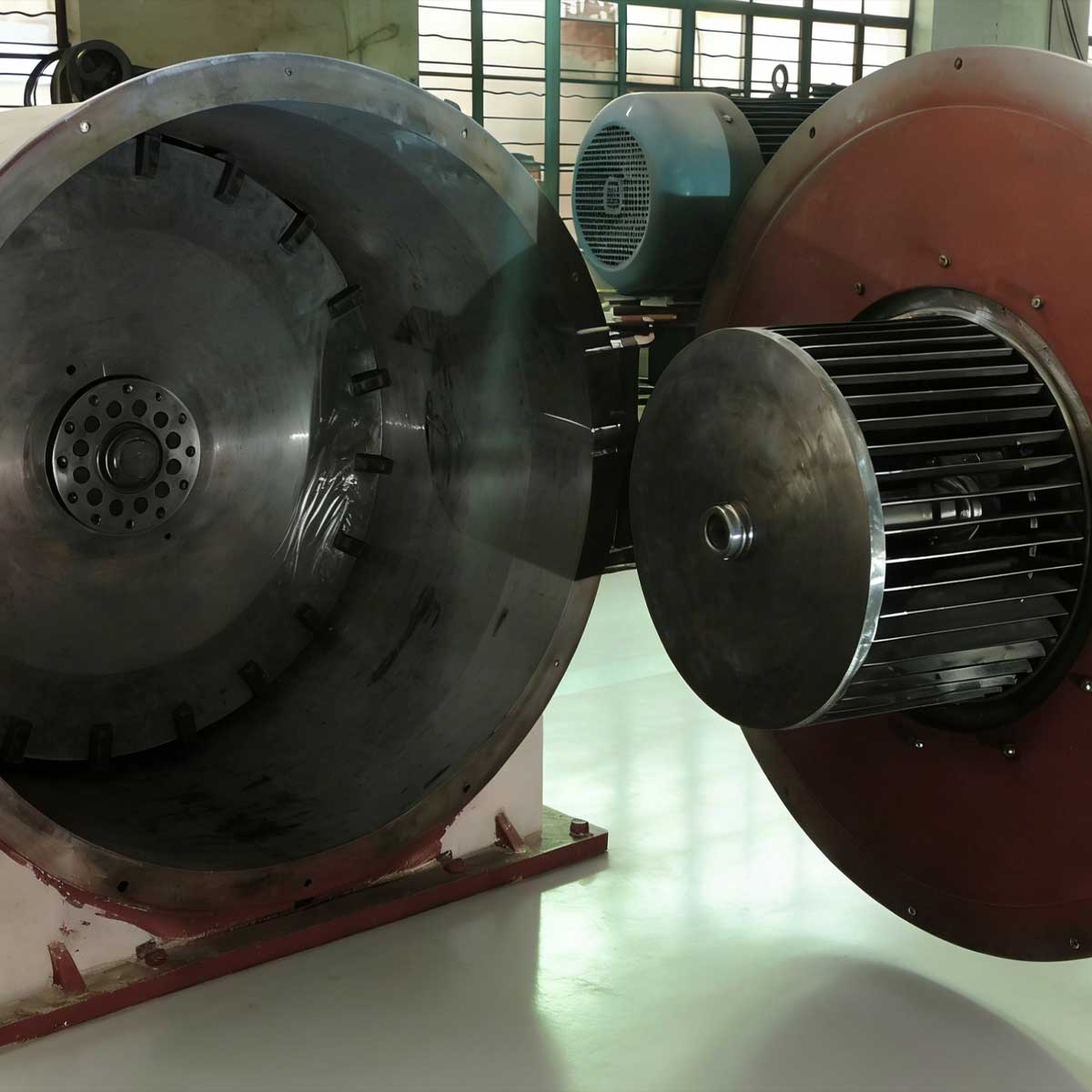
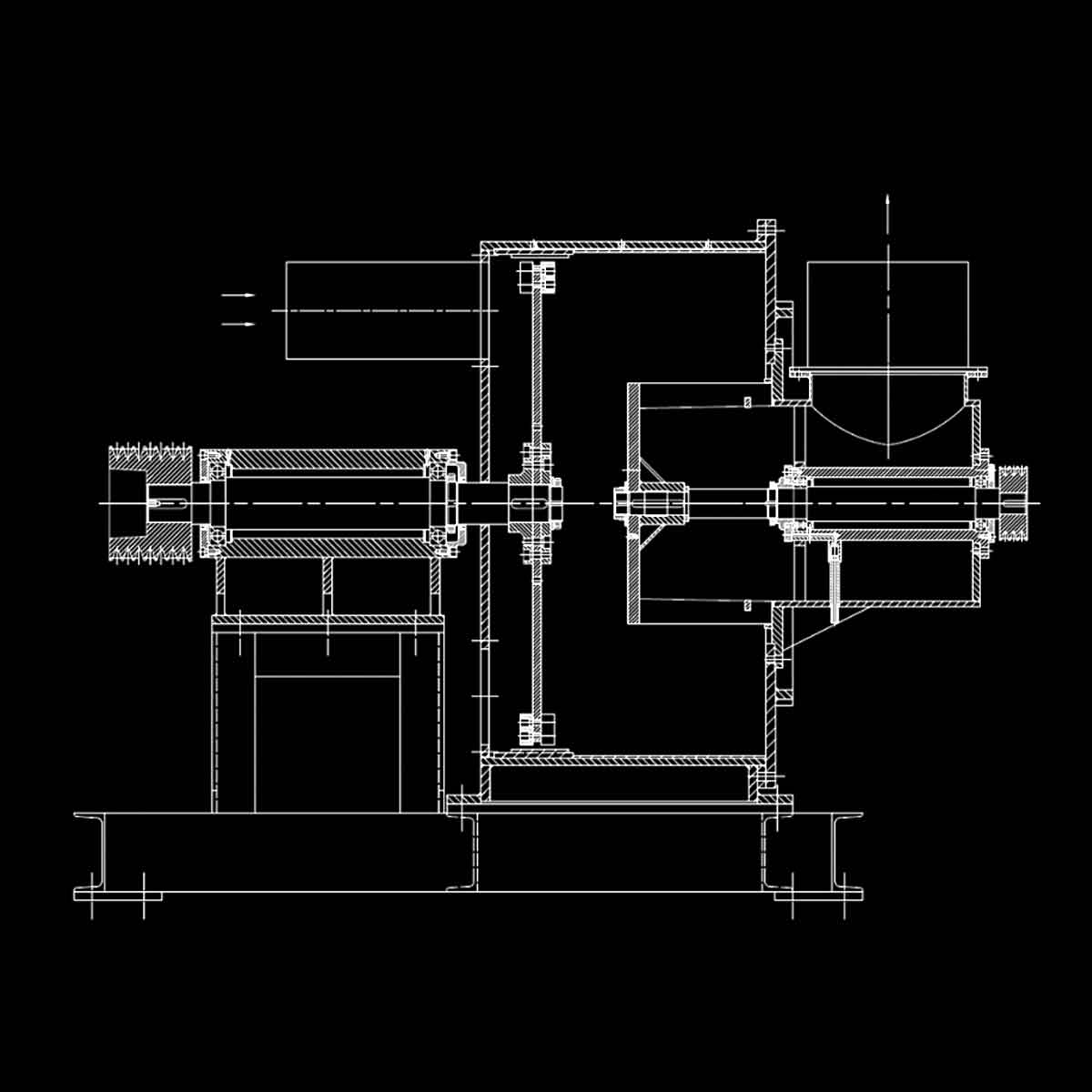
Horizontal Classifier Mill
The horizontal classification mill adopts a horizontal layout with a compact overall structure and small space occupation, which adapts to the layout requirements of various production sites and is especially suitable for the grinding processing of viscous and brittle materials.
This equipment has inherent design shortcomings, and conflicting internal flow fields are prone to occur. This problem is directly reflected in the production process, which easily leads to unstable grinding current, and at the same time causes fluctuations in the particle size of finished products, exerting a certain impact on the control of powder particle size uniformity and the stable operation of the production process.
Equipment
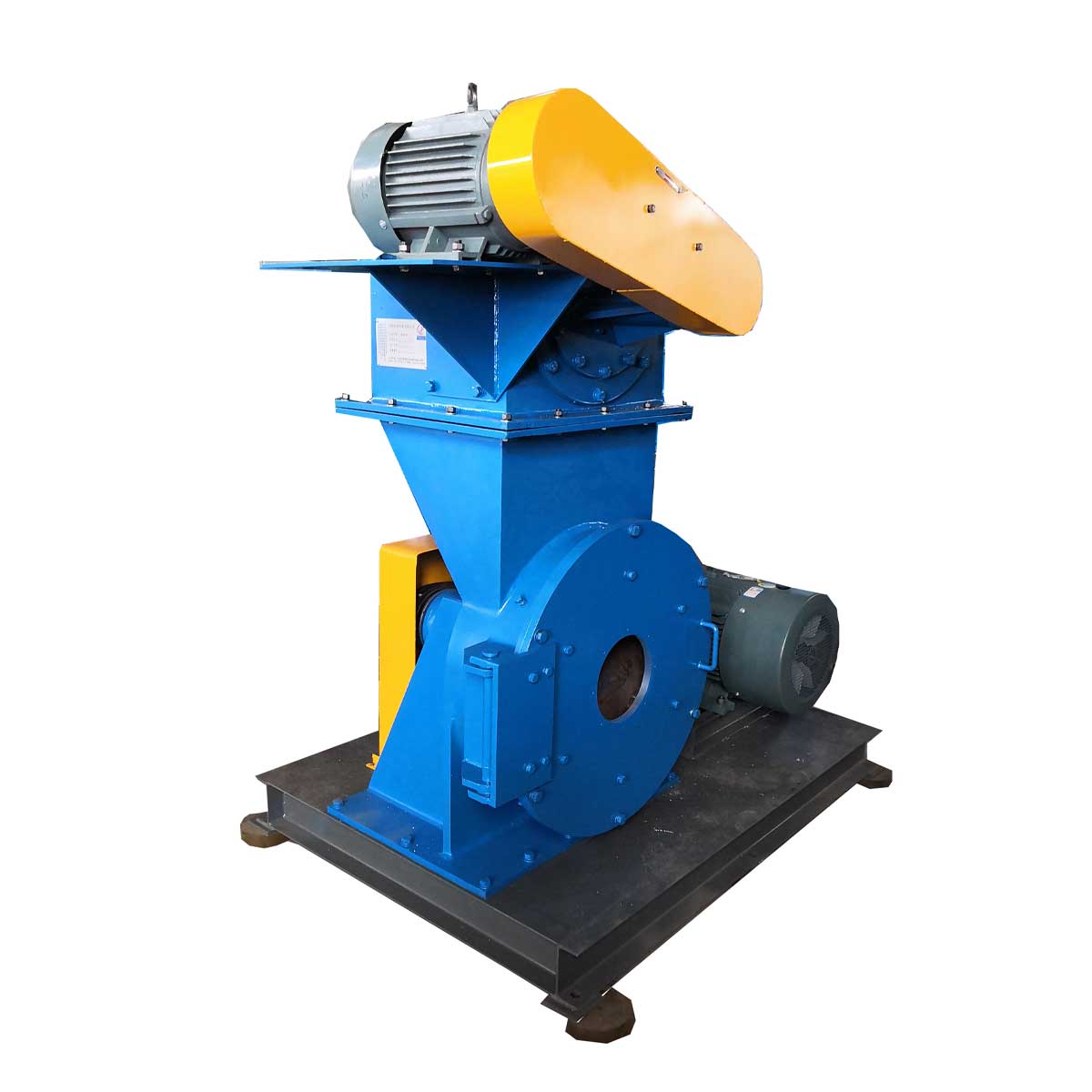
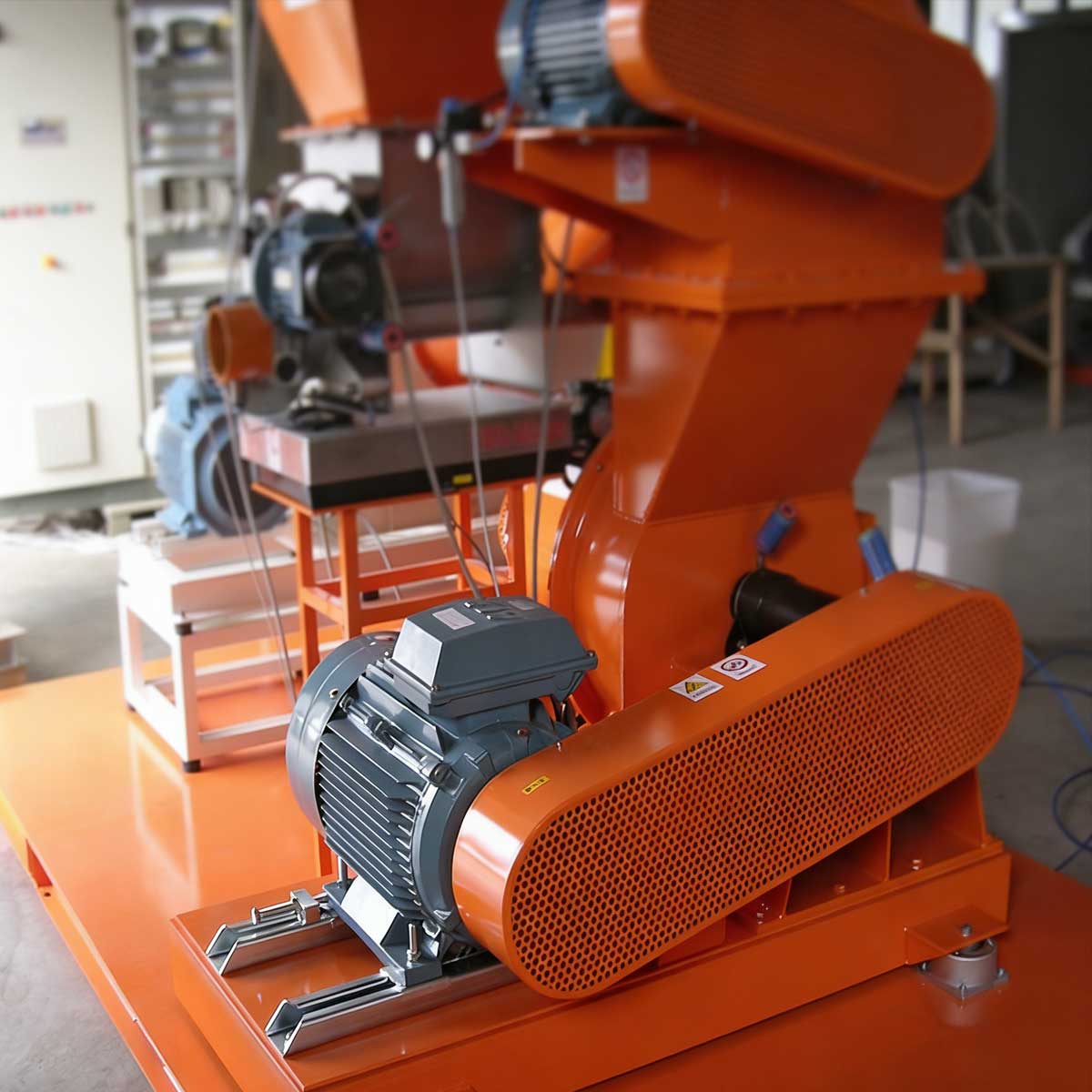
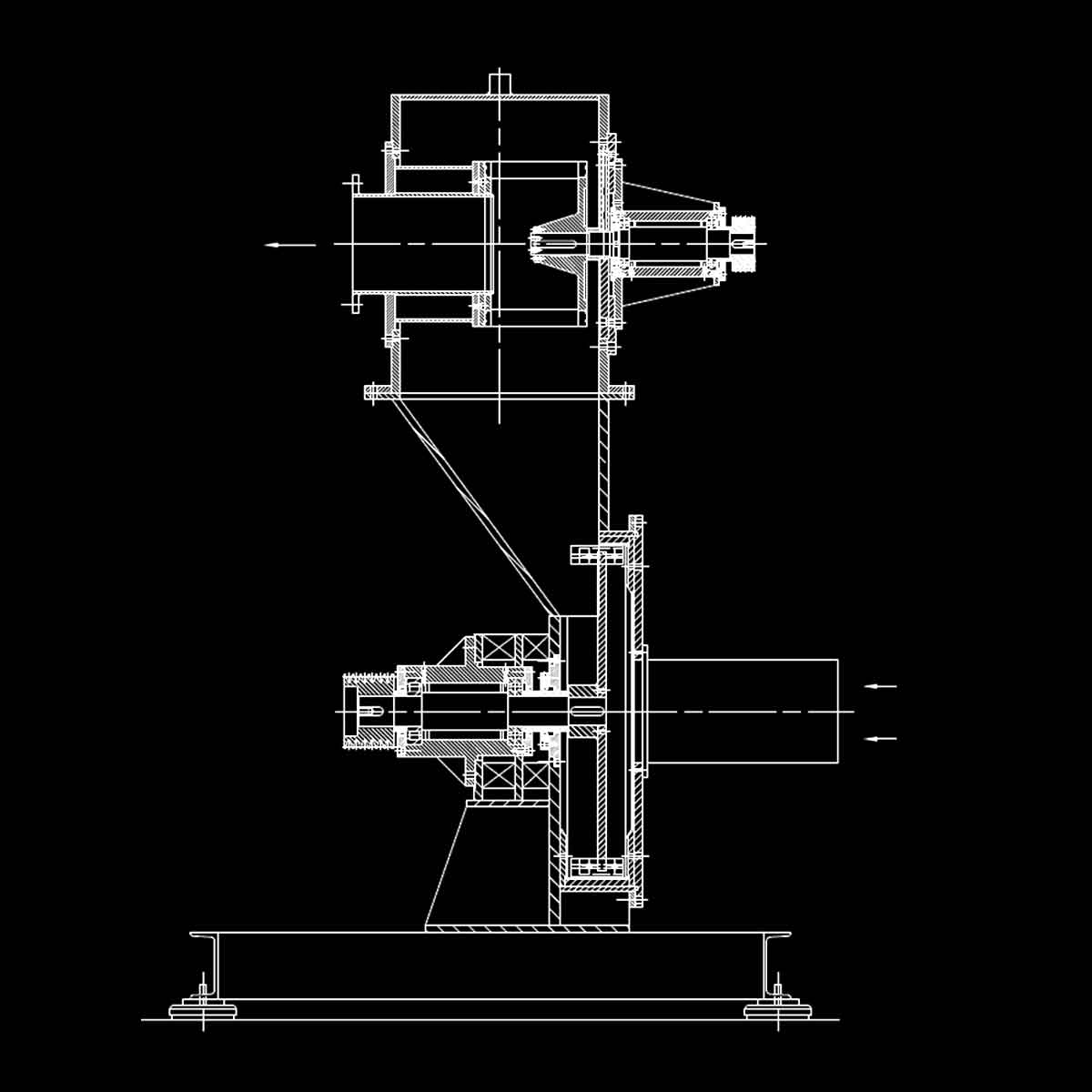
Horizontal Heightened Classifier Mill
This special model focusing on particle shaping features a targeted heightened classification chamber and a newly designed flow field structure, optimizing the equipment’s operational performance and particle shaping effect from the source.
The grinding blocks are arranged on both sides of the grinding disc to ensure every particle passes through the shaping zone and undergoes sufficient, uniform shaping, which greatly improves the regularity of the finished product’s particle shape. An independent classification chamber is installed to completely separate the ascending air flow from the return air flow of coarse particles, eliminating their mutual interference and thoroughly resolving the problem of flow field disturbance.
There is no area with a flow velocity lower than 6m/s throughout the interior of the equipment, which fundamentally avoids material accumulation, ensures the continuous and stable operation of the equipment, and adapts to the large-scale and high-demand powder particle shaping processing requirements.
Equipment
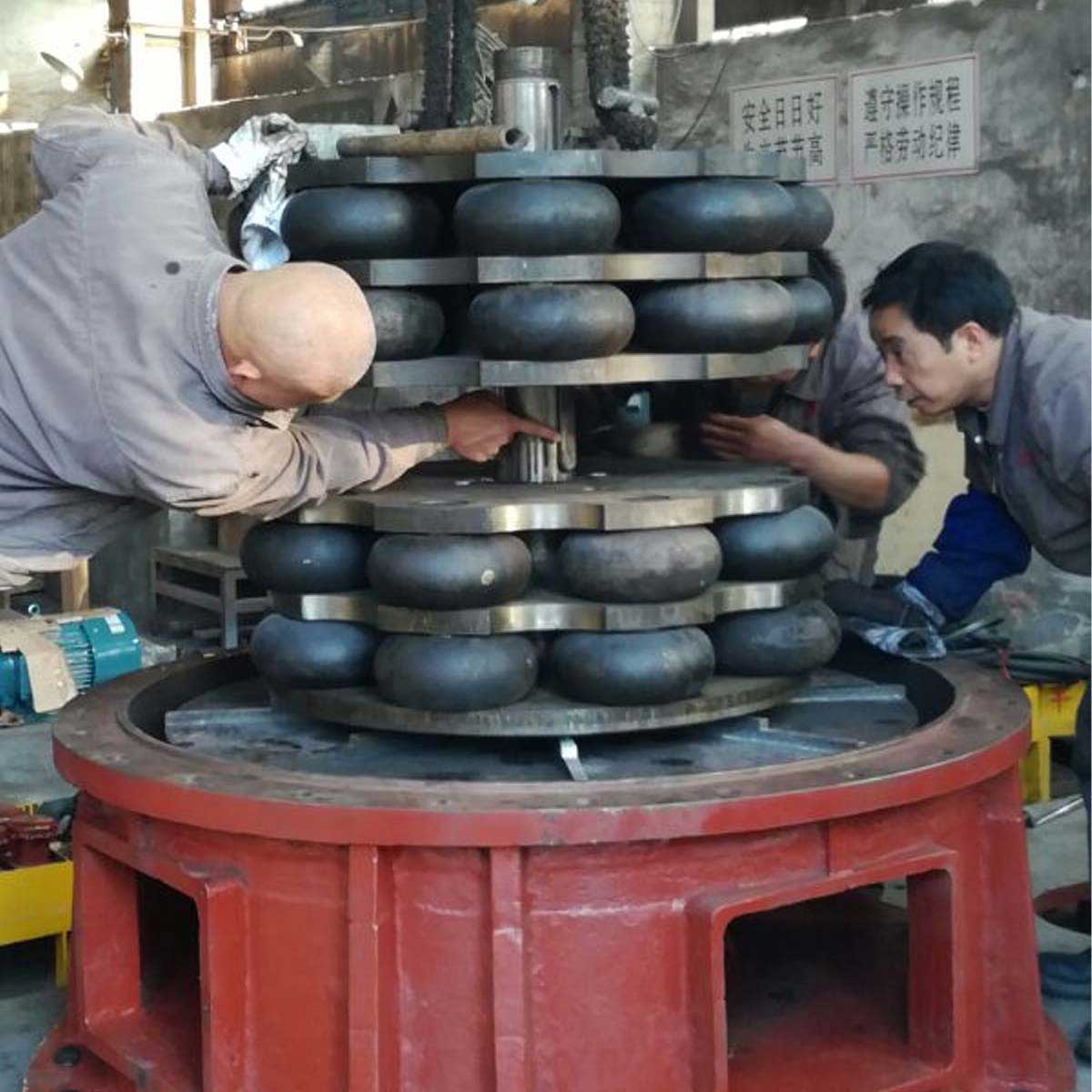
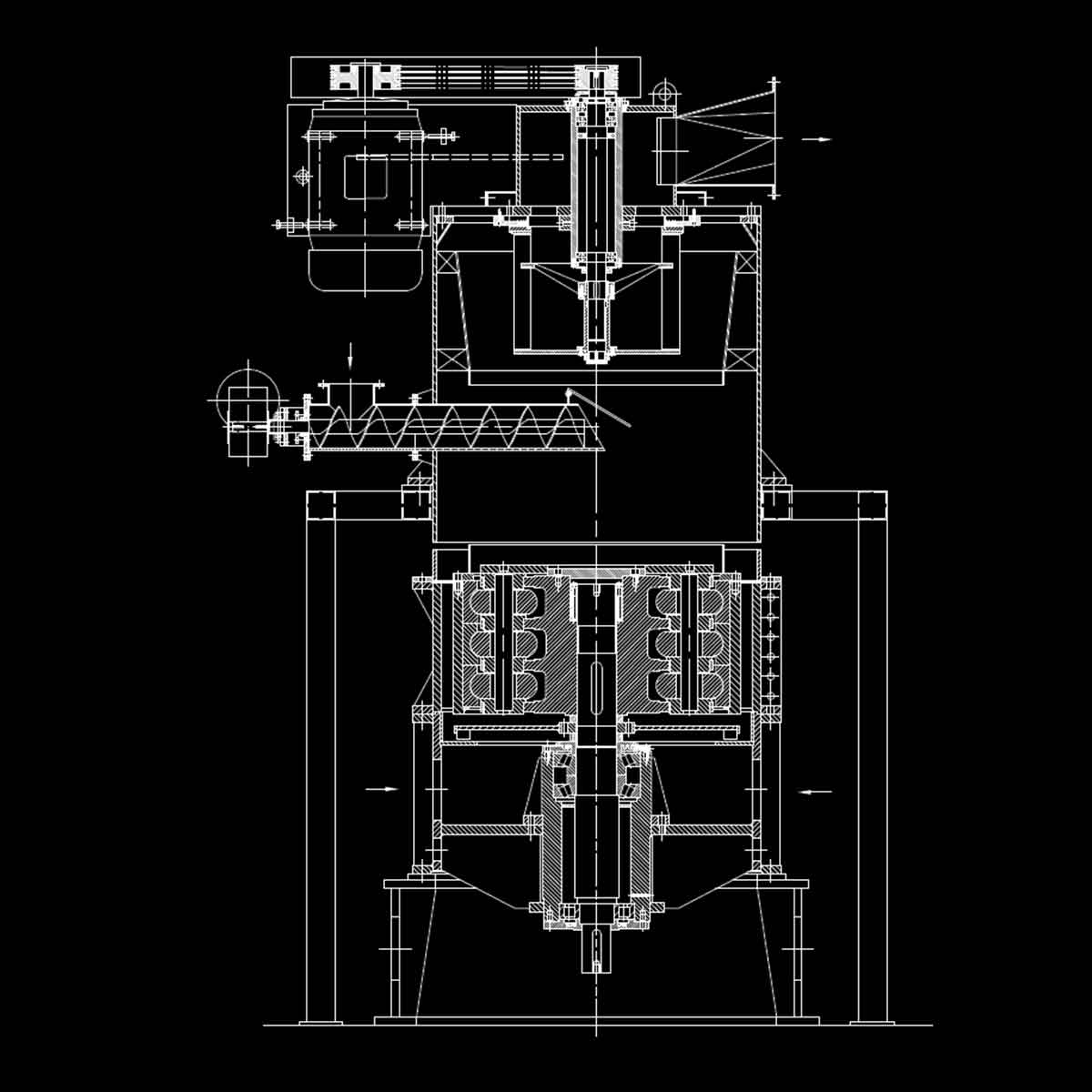
Ring Roller Mill
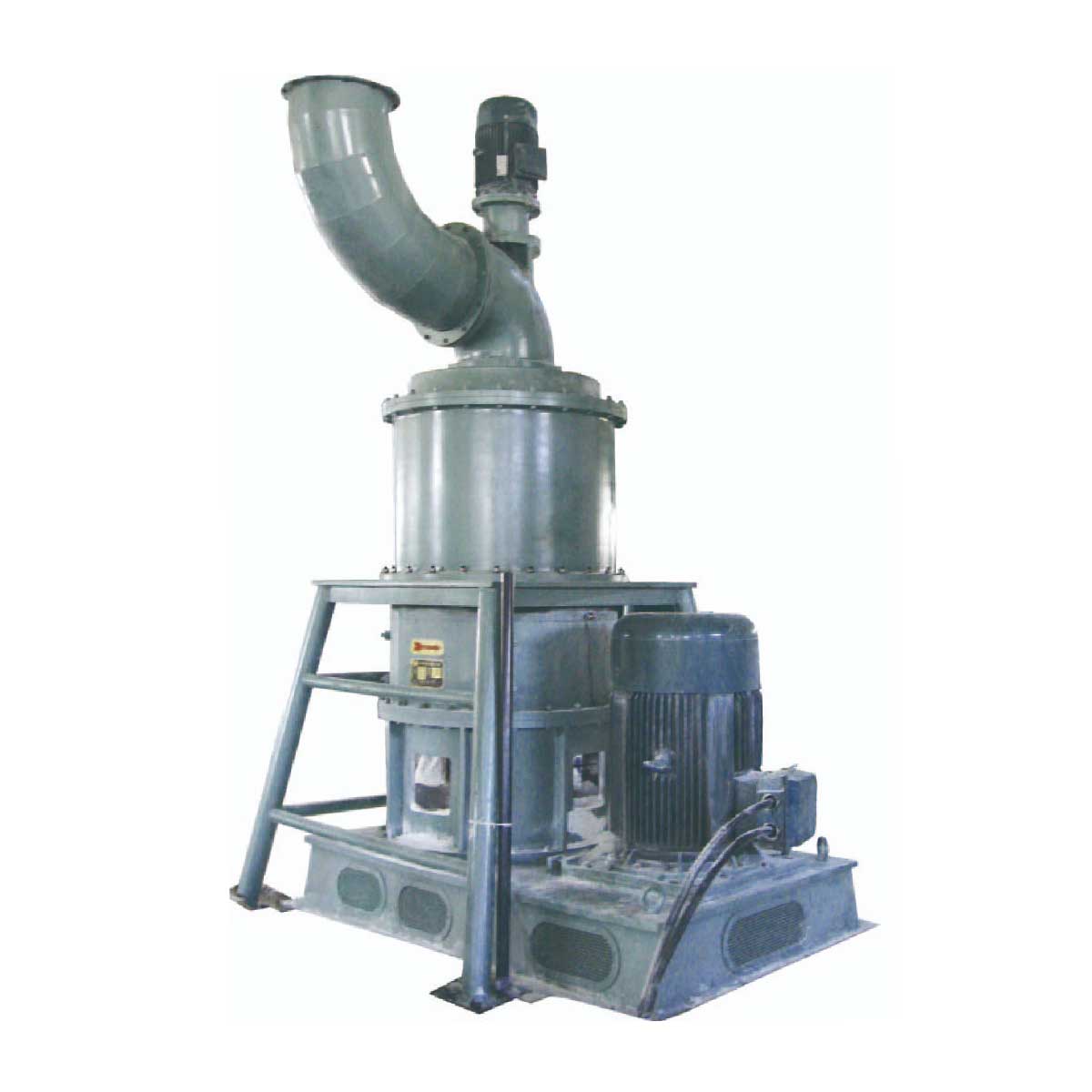
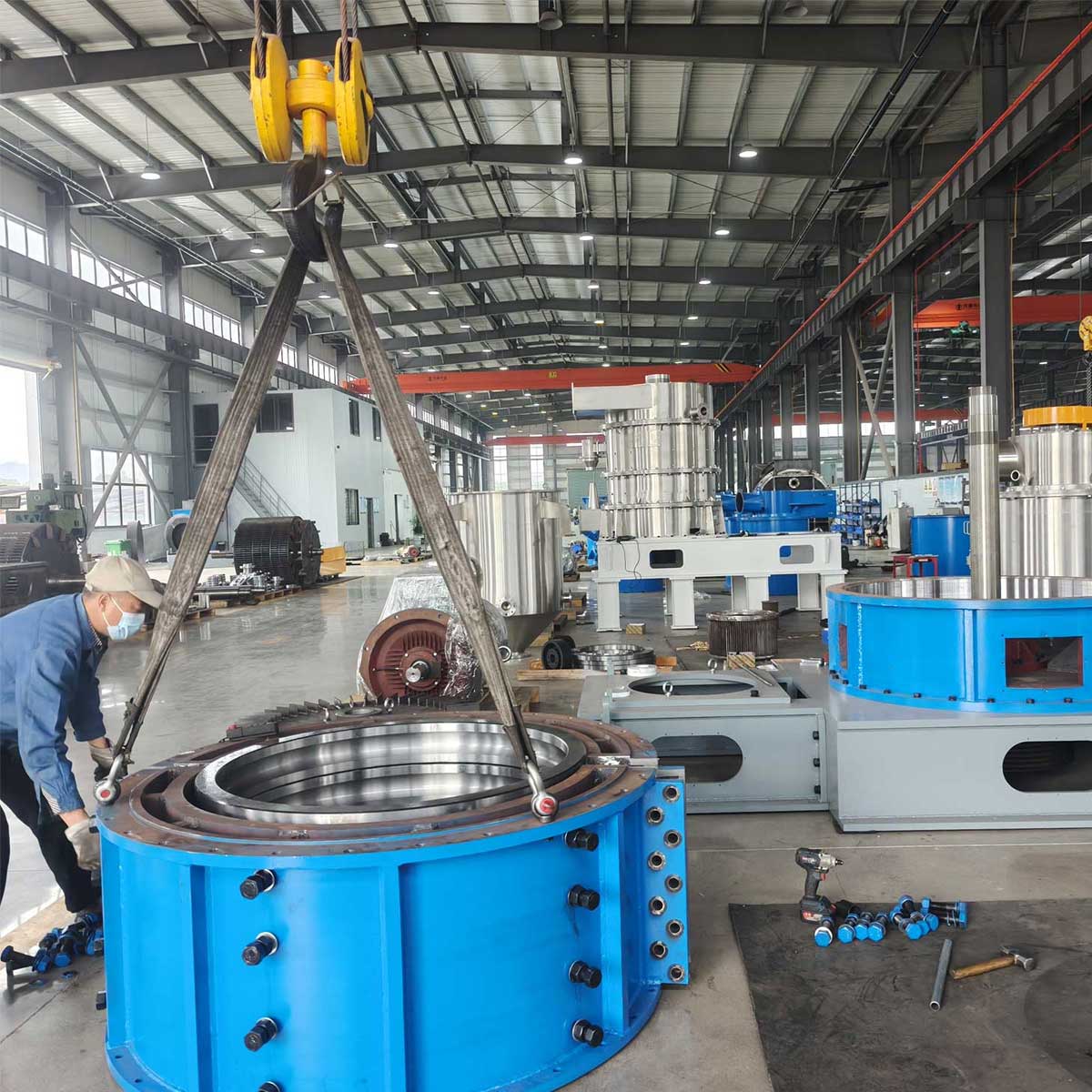
The lower part is a roll mill, and the upper part is an ultra-fine classifier with an integrated design combining the functions of grinding and classification, which adapts to the requirements of refined powder processing.
Materials are fed into the center of the grinding disc by a screw feeder, and enter the grinding zone formed by the grinding rollers and the stator, where they are ground under the combined action of strong extrusion and grinding forces. The ground materials fall onto the material throwing disc, which rotates synchronously with the main shaft and throws the powder into the annular gap between the stator and the machine body. Driven by the system negative pressure, the powder rises along the splitter ring to the upper classification chamber. Qualified fine powder enters the collection system through the classifier wheel, while coarse materials fall back to the grinding chamber along the inner wall of the splitter ring for re-grinding.
The equipment adopts the roll grinding process, delivering excellent powder fineness performance. Meanwhile, it operates at a low rotational speed, enabling easy processing of high-hardness materials and adapting to the processing requirements of various types of hard powder.
Equipment
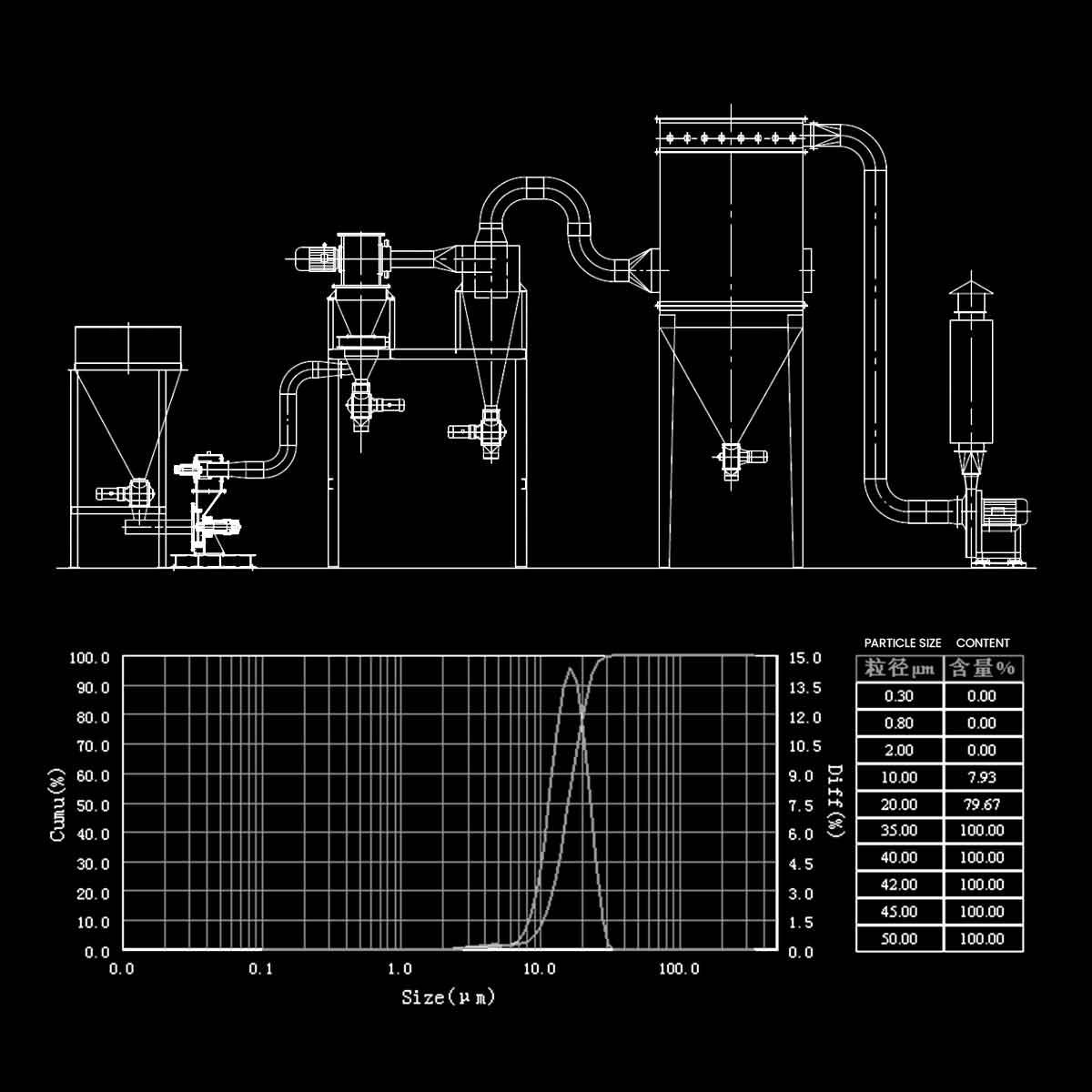
Continuous Shaping System
The complete system consists of a particle shaping machine, a classifier, a cyclone collector, a dust collector and an induced draft fan. The materials to be shaped are uniformly fed into the particle shaping machine through the feeding system, and after shaping, they enter the external classifier which is responsible for removing fine powder. Among them, the main unit of the particle shaping machine ensures that the D50 index meets the standard, the built-in classifier of the particle shaping machine controls the D90 index requirements, and the external classifier satisfies the D10 index standard.
The system is equipped with three discharge outlets: the external classifier discharges coarse particles, the cyclone collector outputs finished products, and the dust collector collects micro-powder. The materials at each discharge outlet are clearly classified, meeting the material separation requirements for refined processing.
Equipment
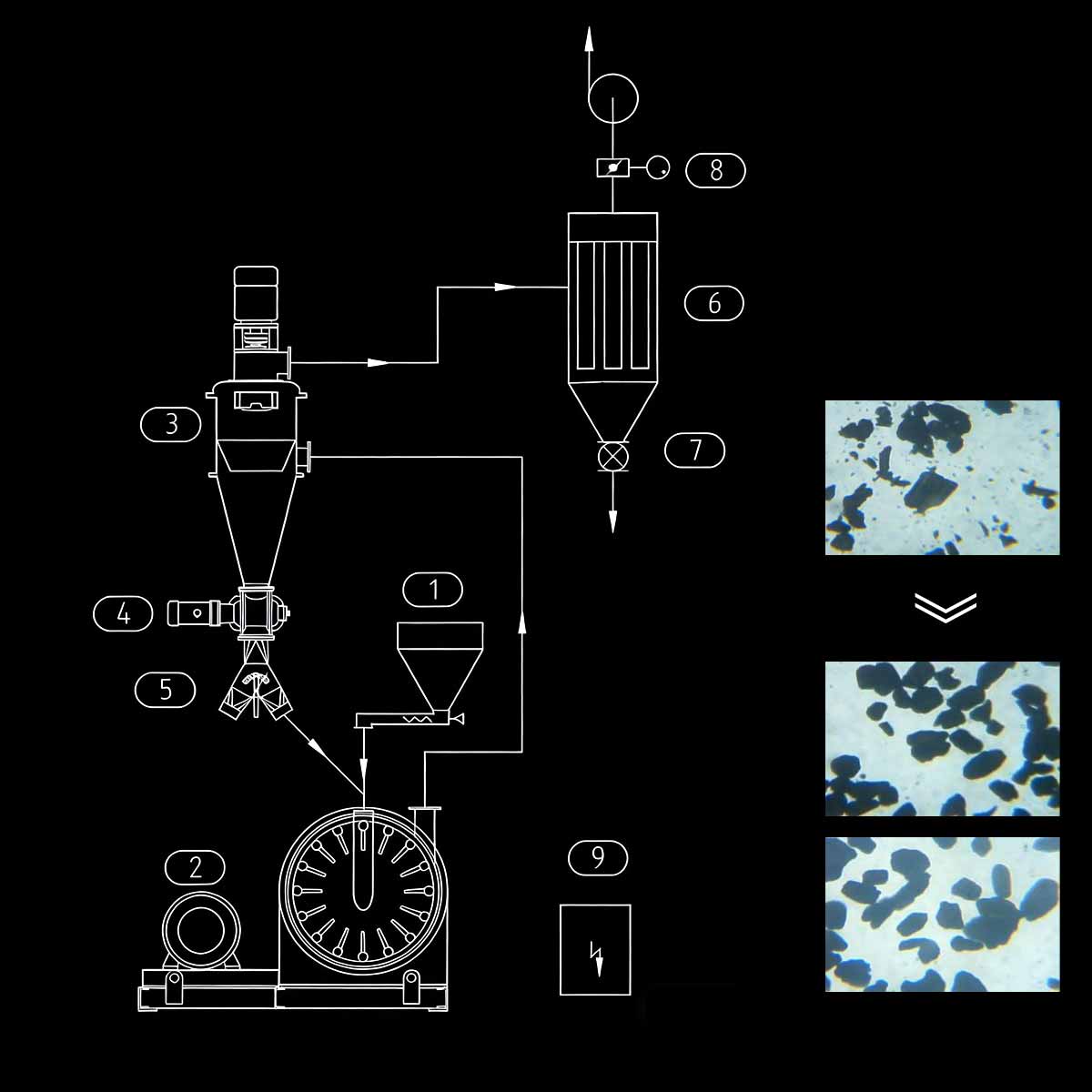
Batch Shaping System
This equipment is specially designed for the subsequent surface shaping of artificial graphite and natural graphite, and is suitable for the post-processing of ACM type mechanical crushing and shaping machines (internal classification mills). Relying on the action of low-speed mechanical force for a long time, it performs refined restoration on the particle surface morphology, with almost no change in powder particle size during the process and a high yield of finished products maintained.
The system features a closed-loop shaping design, and can flexibly switch between two working states of shaping and discharging through a three-way reversing valve. The shaping duration of raw materials in the system can be precisely adjusted according to actual production needs, adapting to the surface shaping processing requirements of graphite powders of different specifications and meeting the standards of refined production.
Equipment
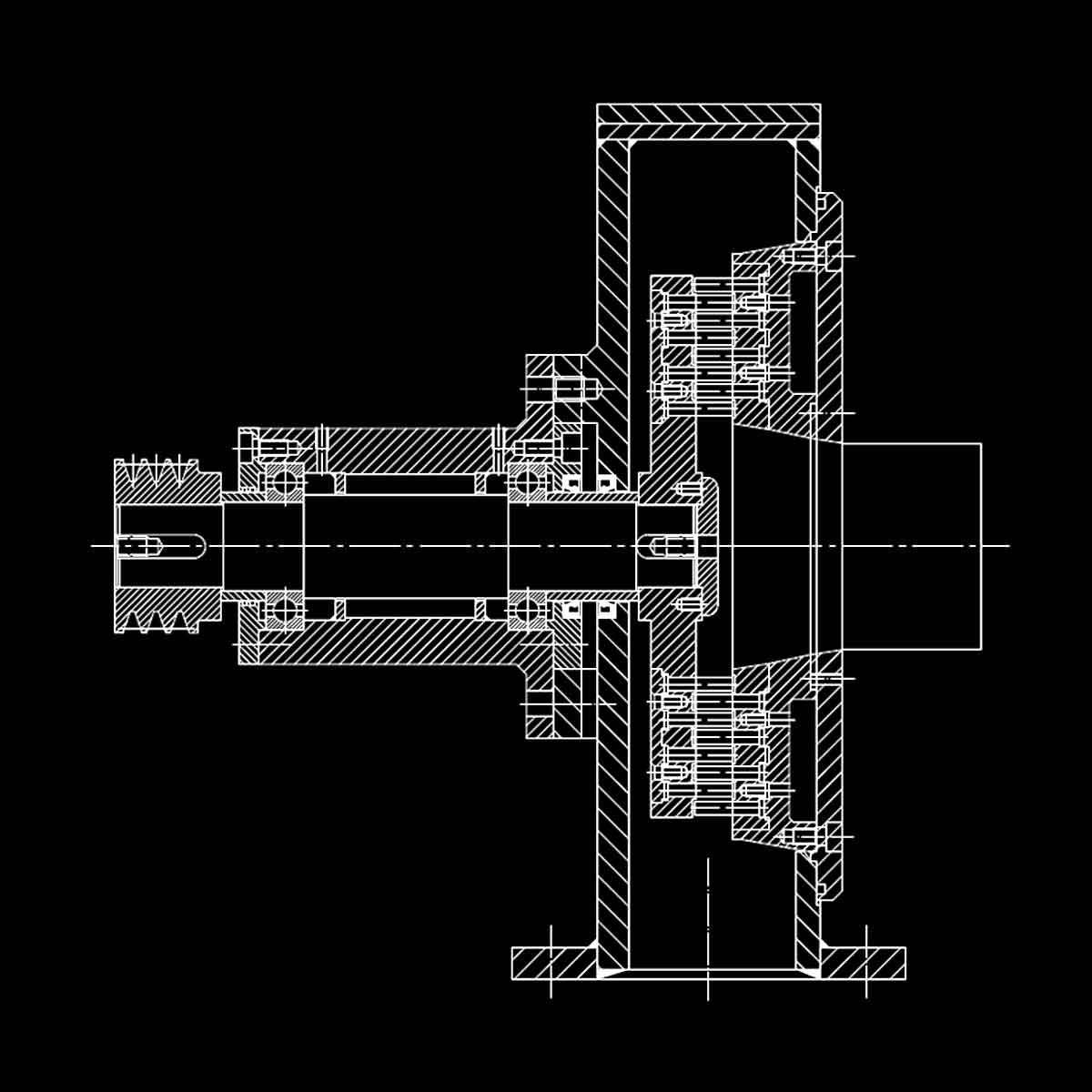
Pin Mill Depolymerization System
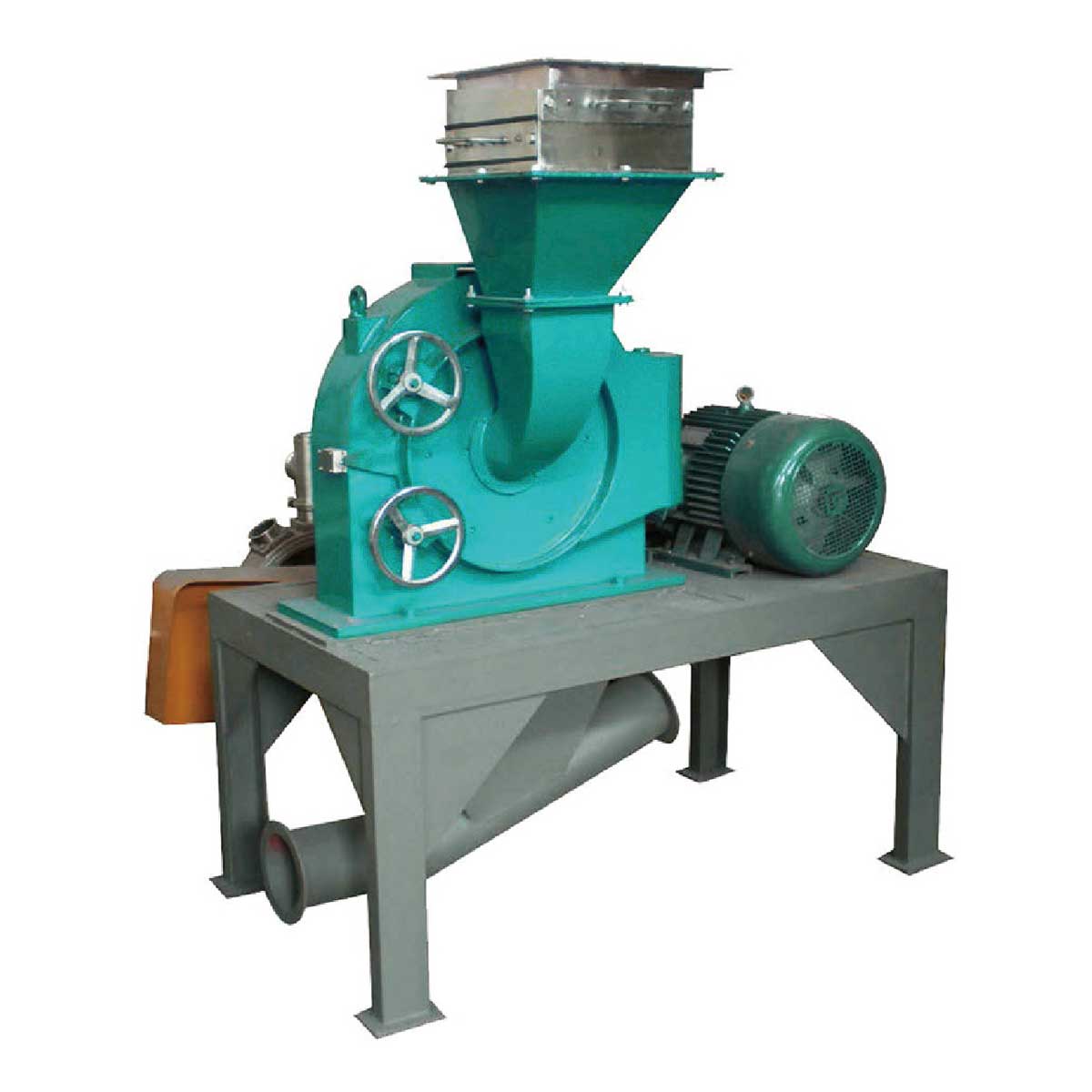
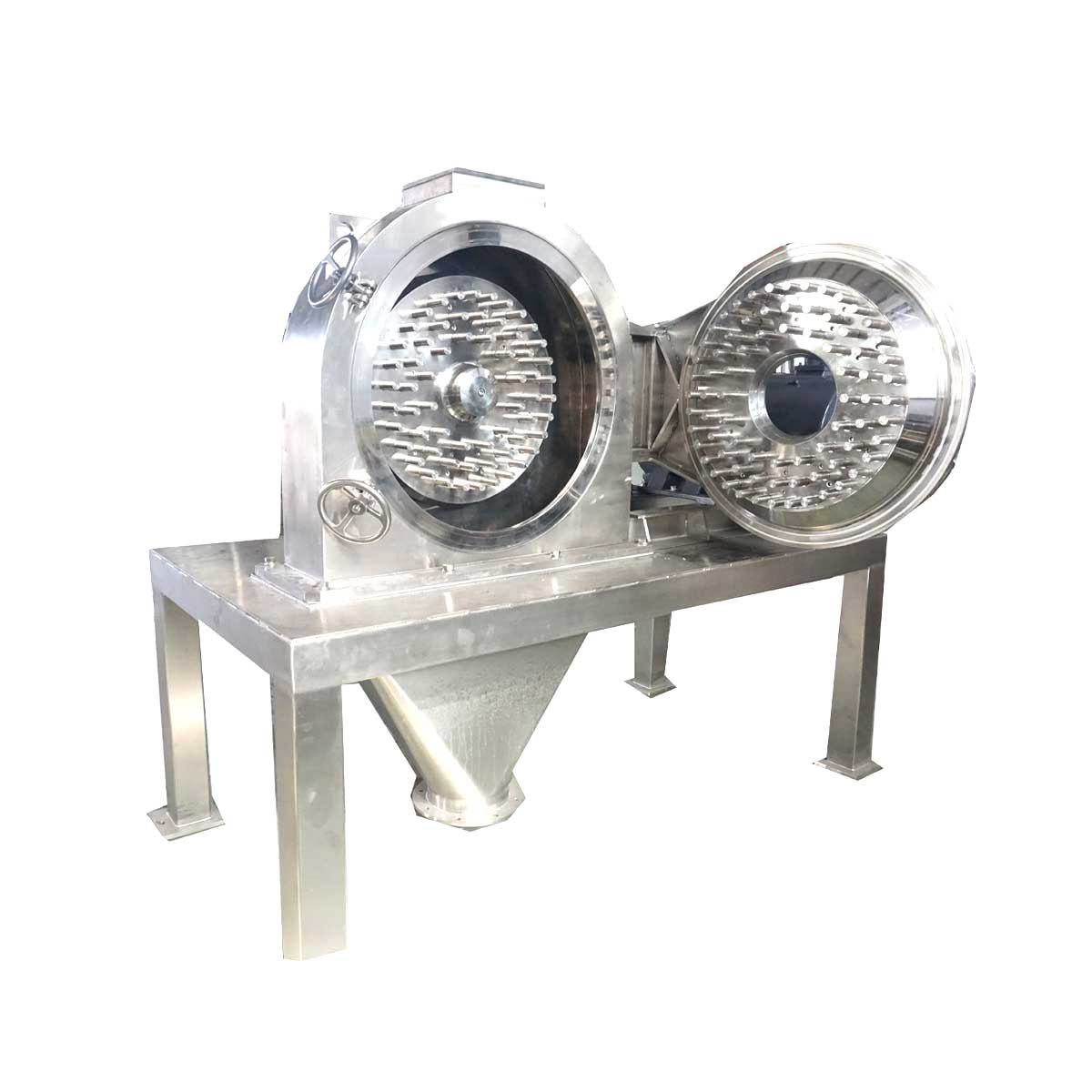
This equipment is mainly used for breaking up agglomerates after granulation of anode materials. Adopting a pin rod structure design, it causes minimal damage to particle surfaces and is a special equipment tailor-made for material deagglomeration processing. It can efficiently break up agglomerates while protecting the original characteristics of particles to the greatest extent.
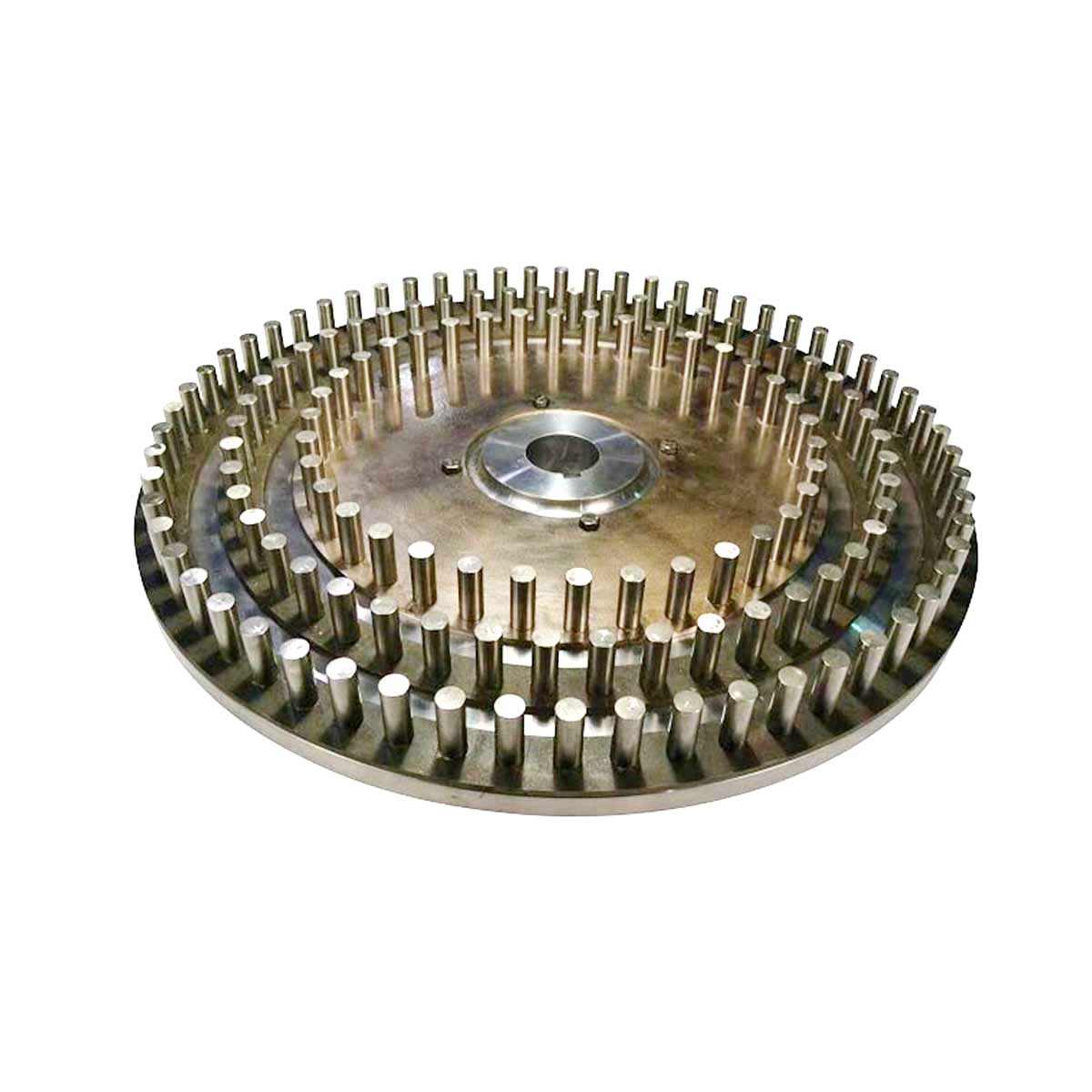
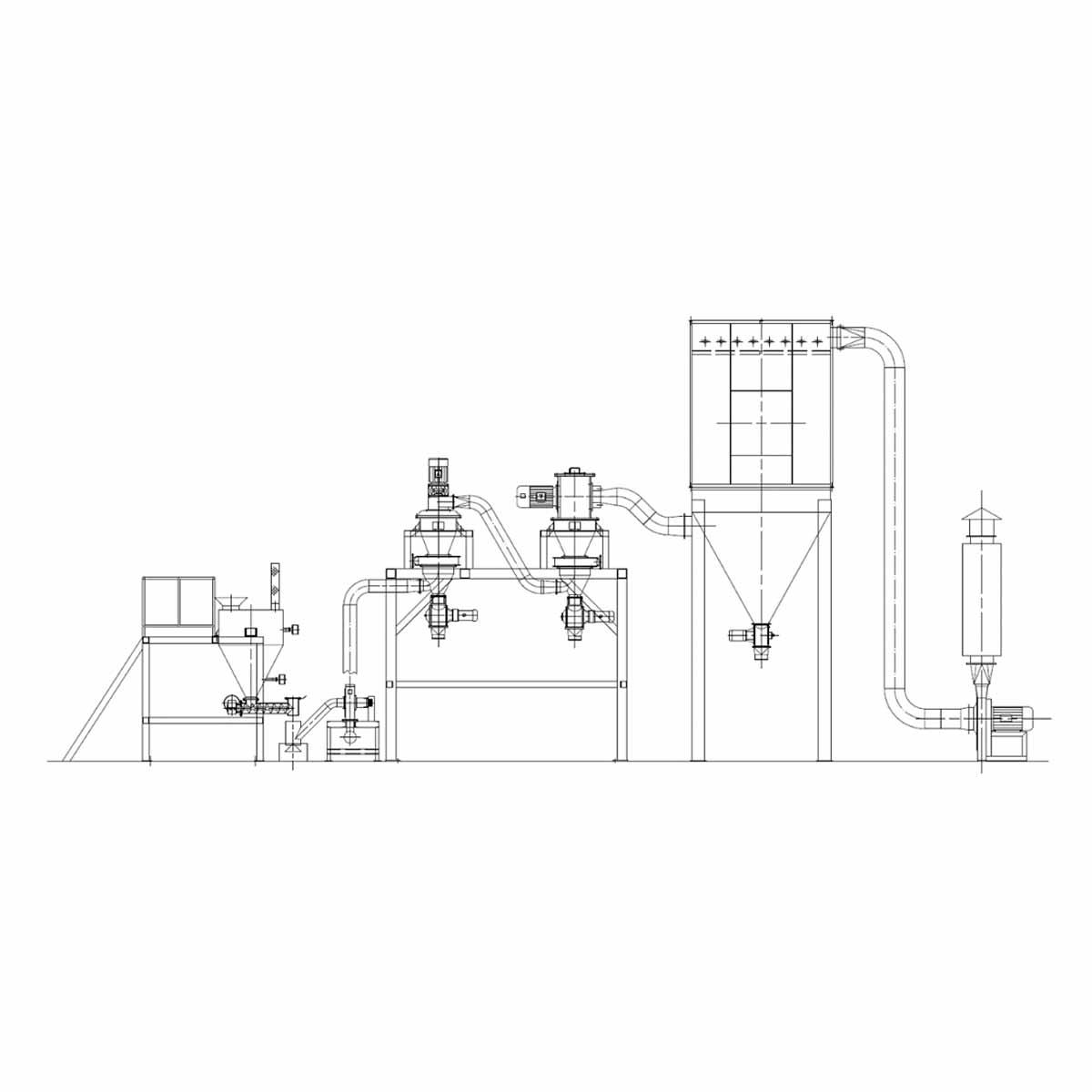
After being fed into the grinding chamber by the feeding device, the materials are accelerated synchronously with the high-speed rotating turntable and move outward under the action of centrifugal force. During the process, they collide violently with the pin rods on the turntable and the static disc to realize grinding, with the grinding intensity increasing toward the outer circumference. Both the turntable and the static disc are equipped with three layers of pin rod rings, ensuring the materials undergo sufficient and uniform grinding, and guaranteeing a finer discharge fineness and a regular particle size distribution. The complete system consists of a pin rod mill, a two-stage classifier, a dust collector and an induced draft fan. The pin rod mill accurately controls the D50 index; the first-stage classification removes large particles to meet the D90 requirement, with coarse particles being able to flow back for further deagglomeration; the second-stage classification removes fine powder to ensure the D10 index.
The system is equipped with three independent discharge outlets: the first-stage classification discharges coarse particles, the second-stage classification outputs finished products, and the dust collector collects micro-powder. The classified discharging is accurate and efficient, meeting the refined requirements for the deagglomeration processing of anode materials.