Graphite grinding operations present significant explosion hazards due to the combustible nature of graphite dust, which forms explosive clouds when suspended in air. This guide outlines mandatory safety requirements based on international standards (ATEX, IECEx, NFPA) and industry best practices for equipment used in hazardous areas.
1. Graphite Dust Explosion Characteristics
Graphite dust exhibits these critical explosion parameters that dictate protection requirements:
| Parameter | Typical Value | Significance |
|---|---|---|
| Minimum Explosible Concentration (MEC) | 40-150 g/m³ | Lowest dust concentration that can sustain an explosion |
| Minimum Ignition Energy (MIE) | Moderate | Lower than many organic dusts |
| Minimum Ignition Temperature (MIT) | 650-900°C | Hot surface temperature limit for equipment |
| Maximum Explosion Pressure (Pmax) | 6-8 bar | Design pressure for vessel protection |
| Deflagration Index (Kst) | 10-140 mbar/s | Classifies graphite as St-1 (low explosion severity) |
| Electrical Conductivity | High | Affects static electricity control requirements |
2. Hazardous Area Classification
Graphite grinding areas are classified as Dust Hazardous Locations (Class II in NFPA, Zone 20/21/22 in ATEX/IECEx):
| Zone/Division | Definition | Typical Application |
|---|---|---|
| Zone 20 / Division 1 | Continuous presence of explosive graphite dust clouds during normal operation | Grinding mill internal, immediate discharge areas |
| Zone 21 / Division 1 | Likely occurrence of explosive dust clouds during normal operation | Grinding chamber vicinity, classifier housing |
| Zone 22 / Division 2 | Infrequent, short-duration explosive dust clouds during abnormal conditions | Perimeter areas around grinding equipment |
Critical: Classification must be conducted by a qualified professional following standards like NFPA 499 or IEC 60079-10-2.
3. International Standards Compliance
ATEX/IECEx Requirements (Europe/Global)
- ATEX Directive 2014/34/EU: Mandatory for EU equipment; requires CE marking with Ex certification
- Equipment Categories:
- Zone 20: Category 1 (Cat. 1) (Da protection level)
- Zone 21: Category 2 (Cat. 2) (Db protection level)
- Zone 22: Category 3 (Cat. 3) (Dc protection level)
- Group Classification: Graphite falls under IIIC (conductive dusts)
NFPA Requirements (North America)
- NFPA 652: Foundation standard for combustible dust management
- NFPA 654: Specific requirements for manufacturing/processing combustible particulate solidsNFPA
- NFPA 68: Deflagration venting design criteria
- NFPA 69: Explosion prevention systems requirements
- NFPA 70 (NEC): Electrical installation in hazardous locations
4. Equipment Explosion Protection Requirements
4.1 Electrical Equipment Protection
| Protection Type | Description | Suitable Zones |
|---|---|---|
| Ex d (Flameproof) | Enclosure withstands internal explosions; prevents flame propagation | Zone 21/22 |
| Ex e (Increased Safety) | Enhanced safety margins for electrical components | Zone 22 (limited Zone 21) |
| Ex ia (Intrinsically Safe) | Low energy design prevents ignition; safest option | All zones, especially Zone 20 |
| Ex t (Protective Enclosures) | Limits surface temperatures below MIT | All zones |
| Ex n (Non-incendive) | Non-sparking design for normal operation; shuts down on fault | Zone 22 only |
Hot Surface Limits: All electrical components must maintain surface temperatures ≤ 60% of graphite’s MIT (typically ≤ 500°C).
4.2 Mechanical Equipment Protection
Grinding Mill Design Requirements
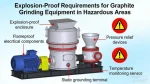
- Pressure Resistance: Mill housing must withstand Pmax + safety factor (minimum 10 bar for graphite)
- Explosion Venting:
- Install vents sized per NFPA 68 or EN 14491, located to safely direct pressure release away from personnel
- Use flameless venting (e.g., Q-Rohr) where direct venting is impractical
- Isolation Systems:
- Install explosion isolation valves on all connecting pipes/ducts to prevent explosion propagation
- Use rotary valves or flap valves as type-tested protection systems
- Active Explosion Suppression:
- Required when venting is not feasible (indoor installations)
- Systems must detect explosion within milliseconds and discharge suppressant before pressure reaches destructive levels
5. Ignition Source Control
5.1 Mechanical Ignition Prevention
- Friction/Impact: Use spark-resistant materials (stainless steel, bronze) for grinding media, liners, and classifier components
- Bearings: Install temperature monitoring systems; use sealed, lubricated designs with automatic shutdown on overheating
- Foreign Object Detection: Implement metal detectors and magnetic separators to prevent tramp metal entry
5.2 Static Electricity Control
Despite graphite’s conductivity, static risks persist:
- Bonding & Grounding: All equipment components must be properly bonded and grounded (resistance ≤ 10⁶ Ω)
- Humidification: Maintain relative humidity > 60% where possible to reduce static generation
- Anti-static Additives: Consider in process fluids (if applicable)
- Conductive Materials: Use conductive hoses, pipes, and filters throughout the system
5.3 Thermal Ignition Prevention
- Hot Surface Limits: All equipment surfaces must stay ≤ 500°C (well below graphite’s MIT of 650-900°C)
- Heated Components: Install thermal insulation and temperature monitoring with automatic shutdown
- Electrical Heating: Prohibited in Zone 20/21 without special Ex ia protection
6. Specific Grinding Equipment Requirements
6.1 Grinding Mills (Ball, Rod, Hammer, Jet)
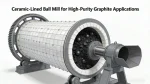
- Enclosure: Must be explosion-resistant (minimum 10 bar pressure rating)
- Ventilation: Install dedicated dust extraction systems to maintain dust concentration below MEC (40-150 g/m³)
- Access Points: Use quick-acting, flame-tight closures with pressure relief capabilities
- Cooling Systems: For high-speed mills, install forced cooling to maintain surface temperatures within limits
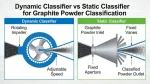
6.2 Classifiers & Separators
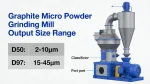
- Explosion Protection: Same requirements as grinding mills (pressure resistance, venting, isolation)
- Static Control: Ensure all rotating components are grounded and use conductive materials for classifier wheels
- Sealing: Hermetic seals to prevent dust leakage into non-hazardous areas
6.3 Dust Collection Systems
- Filter Housings: Must be rated for Pmax with appropriate explosion vents or suppression systems
- Filter Media: Use conductive or anti-static filter bags compatible with graphite dust
- Cleaning Systems: Pneumatic pulse cleaning must be designed to avoid dust re-entrainment above MEC
- Isolation: Install explosion isolation valves between dust collector and grinding equipment
7. Operational Safety Requirements
- Dust Control:
- Implement regular cleaning schedules to prevent accumulations exceeding 1/32 inch (0.8 mm) (NFPA 654 requirement)NFPA
- Use vacuum systems with ATEX-certified motors for cleaning
- Maintenance:
- Perform only when equipment is de-energized and cleaned
- Use non-sparking tools (brass, aluminum-bronze) in hazardous areas
- Inspect explosion protection systems (vents, isolation valves) at least quarterly
- Monitoring:
- Install continuous dust concentration monitors with alarm setpoints at 50% of MEC
- Use temperature sensors on bearings and motor windings with automatic shutdown
- Install pressure sensors to detect incipient explosions
- Training:
- All personnel must be trained in graphite dust explosion hazards and emergency procedures
- Document training and conduct annual refreshers
8. Documentation & Compliance
- Certification: All equipment must have valid Ex certification (ATEX, IECEx, or NFPA equivalent)
- Risk Assessment: Documented explosion risk assessment (per ATEX 153 or NFPA 652) must be available onsite
- Maintenance Records: Detailed logs of inspections, testing, and repairs for explosion protection systems
- Emergency Plans: Written procedures for explosion incidents, including evacuation routes and shutdown protocols
Summary of Critical Requirements
| Requirement Category | Mandatory Elements |
|---|---|
| Classification | Zone 20/21/22 designation by qualified professional |
| Certification | Ex marking for appropriate zone (Cat. 1/2/3, Da/Db/Dc) |
| Pressure Resistance | Equipment rated for minimum 10 bar (graphite Pmax) |
| Venting/Isolation | Explosion vents (NFPA 68/EN 14491) + isolation valves on all connections |
| Temperature Limits | All surfaces ≤ 500°C (below graphite’s MIT) |
| Static Control | Full bonding/grounding (≤ 10⁶ Ω) + conductive materials |
| Dust Management | Extraction to keep concentration < MEC + regular cleaning < 0.8 mm layerNFPA |
Graphite grinding equipment in hazardous areas requires a layered protection approach combining prevention (ignition source control, dust management), containment (explosion-resistant design), and mitigation (venting, suppression, isolation) measures to ensure safety.