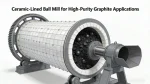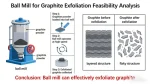
ball milling is a well-established and widely used method for the exfoliation of graphite to produce graphene (or few-layer graphene). It is considered one of the most promising techniques for the large-scale, cost-effective, and environmentally friendly production of graphene.
How Ball Milling Exfoliates Graphite
The process typically involves:
- Mechanical Shear and Impact: Graphite powder is placed in a ball mill (often a planetary ball mill for higher energy) along with grinding media (balls made of steel, zirconia, agate, etc.) and a liquid medium (solvent) or sometimes specific solid additives.
- Exfoliation Mechanism: As the mill rotates at high speeds, the balls collide with the graphite particles and each other. This generates intense shear forces, impact forces, and compression forces. These forces overcome the weak van der Waals forces holding the graphene layers together in bulk graphite, causing them to separate (exfoliate) into thinner sheets.
- Role of Medium/Additives:
- Liquid Phase Exfoliation (LPE): Using a suitable solvent (e.g., N-methyl-2-pyrrolidone (NMP), dimethylformamide (DMF), water with surfactants, or even organic solvents like 2-ethylhexanol or kerosene as found in recent studies) helps stabilize the exfoliated graphene sheets, preventing them from re-aggregating. The solvent can also aid in transferring shear stress more effectively.
- Solid Additives: Sometimes, small molecules (like melamine, urea, or naphthalene derivatives) or salts are added. These can intercalate between graphite layers or act as “wedges” during milling, facilitating exfoliation and potentially reducing defect formation compared to dry milling alone. Recent research (e.g., Padi et al., 2024) highlights “naphthalene-assisted ball-mill exfoliation” for high yields.
Advantages of Ball Milling for Graphite Exfoliation
- Scalability: Easily scalable from laboratory (grams) to industrial (kilograms/tons) production.
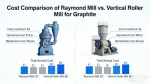
- Cost-Effectiveness: Relatively low equipment and operational costs compared to methods like Chemical Vapor Deposition (CVD).
- Simplicity: The process is straightforward and doesn’t always require complex chemical reactions or harsh conditions (though solvents/additives are often used).
- Versatility: Can be adapted for dry or wet milling, with various solvents and additives to optimize yield and quality.
- Direct Production: Can produce graphene dispersions directly usable in composites, inks, or coatings.
Challenges and Considerations
- Defect Formation: High-energy impacts can introduce defects (vacancies, Stone-Wales defects, edge damage) into the graphene lattice, potentially affecting its electrical and mechanical properties. Optimizing milling parameters (time, speed, ball-to-powder ratio, ball size) is crucial to minimize defects.
- Layer Control: Achieving a uniform number of layers (especially single-layer graphene) can be challenging; the product is often a mixture of few-layer graphene sheets.
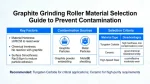
- Contamination: Wear from the milling balls and jar can introduce impurities (e.g., Fe, Zr, Al) into the final product. Choosing appropriate milling media (e.g., zirconia, agate) is important.
- Processing Time: Long milling times (often several hours to tens of hours) may be required for effective exfoliation, which can increase energy consumption and potential defect accumulation.
- Solvent Removal: If liquid phase exfoliation is used, removing the solvent without causing re-aggregation can be an additional step.