
Insights
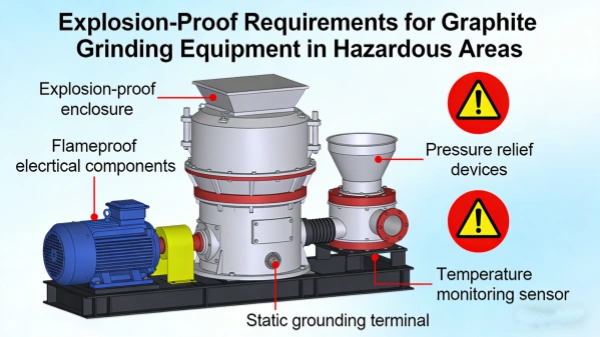
Explosion-Proof Requirements for Graphite Grinding Equipment in Hazardous Areas
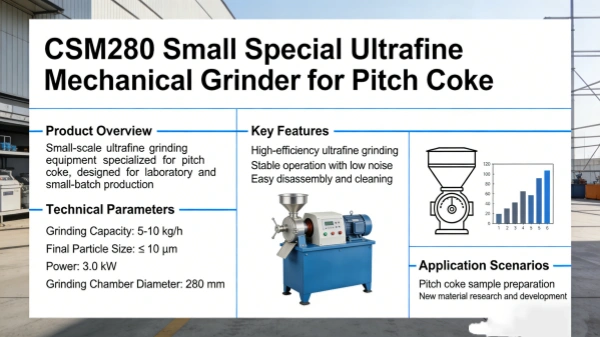
Introduction to CSM280 Small Special Ultrafine Mechanical Grinder for Pitch Coke
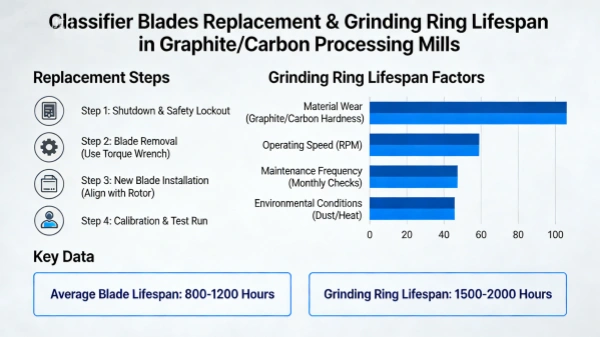
Classifier Blades Replacement & Grinding Ring Lifespan in Graphite/Carbon Processing Mills
Classifier blade replacement frequency depends on multiple factors, but for graphite mills (Mohs hardness 1-2, relatively low abrasiveness), the general guideline is 6-12 months for rotor blades and 8-15 months…
20/03/2026
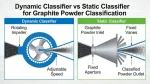
For graphite powder classification—especially critical for battery anode applications demanding narrow PSD (particle size distribution) and precise control—the core trade-off is precision and adjustability (dynamic) versus simplicity and low operational…
19/03/2026
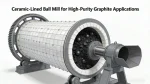
Ceramic-lined ball mills are critical equipment in high-purity graphite processing, designed specifically to maintain ultra-low contamination levels while achieving precise particle size reduction. These mills replace traditional steel liners and…
19/03/2026
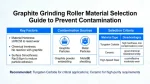
To prevent contamination in graphite grinding, prioritize non-metallic/chemically inert materials with ultra-low wear rates and minimal chemical interaction with graphite. Battery-grade graphite (iron <10 ppm) demands the strictest controls; industrial…
19/03/2026
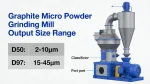
The output size range of micro powder grinding mills for graphite typically spans 5–47 μm (2500–325 mesh) as a standard range, with some models extending to 80–3000 mesh (1.6–150 μm)…
18/03/2026
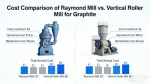
Raymond Mill: 30-40% lower initial investment than vertical roller mills (VRMs), ideal for small-to-medium scale (≤10 t/h) with limited budgets. Higher unit energy consumption (20-50% more than VRM) and shorter…
18/03/2026
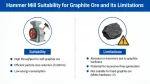
Hammer mills are suitable for graphite ore in coarse-to-medium crushing stages (0-3mm output) , especially for amorphous graphite or pre-processing crystalline graphite before beneficiation. However, they have critical limitations for…
18/03/2026
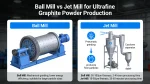
For ultrafine graphite powder production, jet mills are generally preferred for battery-grade and high-purity applications requiring narrow PSD, spherical morphology, and submicron fineness (D50 < 5 μm). Ball mills remain…
17/03/2026
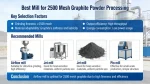
For 2500 mesh (approximately 5 μm) graphite powder processing, the optimal mill depends on your priorities: purity, particle size distribution (PSD) control, production scale, energy efficiency, and application requirements (e.g.,…
17/03/2026
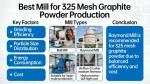
For 325 mesh graphite powder production (≈44μm), the best mill depends on your production scale, budget, and quality requirements. Here’s a structured recommendation to help you choose: Top 3 Mills…
17/03/2026
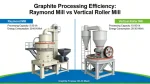
For graphite processing, the choice between Raymond mill and vertical roller mill (VRM) depends on your specific needs for capacity, fineness, energy efficiency, and operational continuity. Below is a detailed…
16/03/2026
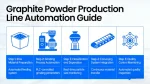
Automation for continuous running is built around closed-loop control, automatic material transfer, online monitoring, and interlock protection — eliminating manual feeding, screening, adjusting, and packaging. 1. Full-Line Continuous Structure Design…
16/03/2026
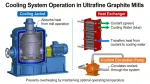
Cooling systems in ultrafine graphite mills manage intense frictional/impact heat (99% of input energy lost as heat) by combining active heat removal (water jackets, chilled air, cryogenic gases) with passive…
16/03/2026
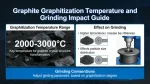
Graphitization is the high-temperature transformation of amorphous carbon into ordered graphite structure with hexagonal layers held by weak Van der Waals forces. The temperature requirements vary by application and material:…
15/03/2026
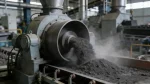
Expandable graphite (EG) is produced by inserting non-carbon atoms/molecules between flake graphite layers via grinding activation and chemical/electrochemical intercalation, creating graphite intercalation compounds (GICs) that expand dramatically when heated. Below…
14/03/2026
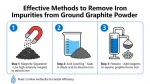
The most effective iron removal from ground graphite powder typically uses a multi-stage approach combining magnetic separation (for ferromagnetic particles) and chemical leaching (for oxidized and chemically bound iron), followed…
13/03/2026
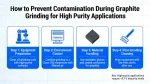
For high-purity graphite grinding (e.g., lithium-ion battery anode graphite with strict impurity requirements), contamination prevention needs a full-process control strategy covering equipment design/materials, grinding process, environmental management, material handling, and…
12/03/2026
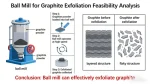
ball milling is a well-established and widely used method for the exfoliation of graphite to produce graphene (or few-layer graphene). It is considered one of the most promising techniques for the large-scale, cost-effective, and environmentally friendly production…
11/03/2026
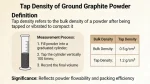
The tap density of ground graphite powder typically ranges from 0.10 g/cm³ to 1.30 g/cm³, with most common industrial values falling between 0.80 g/cm³ and 1.20 g/cm³ for battery-grade graphite…
10/03/2026
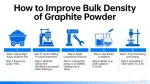
Bulk density = loose packing density (before tapping). Higher bulk density = better flow, less dust, less bridging, easier transportation. 1. Optimize Particle Size Distribution (Most Effective) Use wide particle…