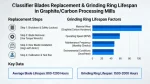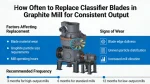
Classifier blade replacement frequency depends on multiple factors, but for graphite mills (Mohs hardness 1-2, relatively low abrasiveness), the general guideline is 6-12 months for rotor blades and 8-15 months for guide blades under normal operating conditions. However, replacement should be based on actual wear measurements and performance indicators rather than just calendar time to ensure consistent particle size distribution (PSD) and output quality.
Key Replacement Intervals and Thresholds
| Blade Type | Normal Replacement Interval | Critical Wear Threshold | Immediate Replacement Triggers |
|---|---|---|---|
| Rotor Blades | 6-12 months | Wear exceeds 30% of original thickness | Cracks, deformation, uneven wear, or imbalance |
| Guide Blades | 8-15 months | Wear exceeds 20% of original thickness | Significant edge rounding, uneven wear affecting airflow |
| Classifier Wheel | 12-24 months | Combined blade wear affecting cut-point stability | Excessive vibration, inability to maintain target PSD |
Factors Affecting Replacement Frequency
- Material Properties:
- Graphite’s low abrasiveness (Mohs 1-2) typically extends blade life compared to harder minerals (e.g., quartz, Mohs 7)
- Impurities in graphite (e.g., silica, iron oxides) increase wear rate
- Particle size requirements (finer grinding = higher classifier speeds = faster wear)
- Operating Conditions:
- Throughput rate (higher throughput = more particles = faster wear)
- Classifier speed (directly proportional to wear intensity)
- Airflow rate and temperature (affects particle impact velocity)
- Maintenance practices (regular cleaning reduces abrasive buildup)
- Blade Material and Design:
- Standard steel blades: basic lifespan (6-12 months)
- Carbide-tipped or coated blades (WC, chromium carbide): 2-3x longer life
- Optimized blade geometry (angle, thickness) improves wear resistance and classification efficiency
Performance Indicators for Replacement Timing
Monitor these consistency-related signals to determine when blades need replacement:
- Particle Size Distribution Changes:
- D50/D97 values drifting outside specification (typically >5-10% deviation)
- Wider PSD (reduced sharpness of classification)
- Increased oversize or undersize particles despite speed adjustments
- Operational Performance:
- Throughput reduction (same feed rate but lower output)
- Motor current increase (sustained +8-15% above baseline) indicating higher energy demand
- Vibration levels exceeding normal range (imbalance from uneven wear)
- Increased classifier speed required to maintain target fineness
- Visual Inspection Findings:
- Blade edge rounding or “feathering”
- Uneven wear patterns (common with misaligned airflow)
- Surface cracks or material loss
- Gap changes between blades and housing affecting airflow dynamics
Maintenance Best Practices for Consistent Output
- Inspection Schedule:
- Daily/Weekly: Monitor motor current, vibration, and output PSD trends
- Monthly: Visual inspection through access ports (if available)
- Quarterly: Comprehensive inspection (shutdown required) including blade thickness measurements and balance checks
- After 3 months of operation: First detailed blade wear assessment
- Replacement Guidelines:
- Replace opposite blades simultaneously to maintain rotor balance
- Use identical weight and dimensions for new blades to prevent vibration
- Consider upgrading to wear-resistant materials if replacement frequency exceeds 6 months
- Document wear rates and replacement dates to establish site-specific baselines
- Optimization Tips:
- Maintain consistent feed rate to avoid overloading and uneven wear
- Clean classifier internals regularly to prevent particle buildup
- Monitor and control airflow to minimize unnecessary blade impact
- Track PSD stability as the primary indicator of classification performance
For consistent output in graphite milling, replace classifier blades based on wear measurements and performance data rather than strict calendar intervals. The general guideline of 6-12 months for rotor blades serves as a starting point, but critical thresholds (30% wear for rotor blades, 20% for guide blades) and performance indicators (PSD drift, throughput reduction, motor current increase) should drive the actual replacement decision. Regular inspections (monthly visual checks, quarterly detailed assessments) combined with proper maintenance practices will ensure optimal classifier performance and consistent graphite powder quality.