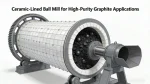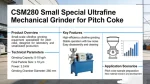
Developed and manufactured with authentic German technology combined with sophisticated Chinese manufacturing, the CSM280 small ultrafine mechanical grinder is specially designed for grinding pitch coke. It is also compatible with petroleum coke, graphite and other materials, and is widely used in fine chemicals, minerals, food & feed, pharmaceuticals & healthcare, electronics, military industry, non-ferrous metals and other industries. Having successfully served internationally renowned powder material enterprises, it has gained market recognition for its efficient and stable performance.
I. Core Features of CSM280 Small Ultrafine Mechanical Grinder
This equipment is optimized and upgraded on the basis of the German ACM air classifier mill, with key improvements to the hammer head and gear ring structure. High wear-resistant alloy materials are adopted to maximize the efficiency of material friction, shearing and collision. Meanwhile, the system configuration is optimized in line with domestic technical capabilities, balancing high-efficiency grinding and stable operation. The specific features are as follows:
- Adopting the foreign high-efficiency grinding structure with a rational match of the high linear speed of the moving disc and the sharp angle of the gear ring, the grinding efficiency is greatly improved with more reasonable energy consumption.
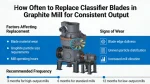
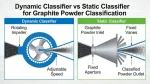
- Equipped with a conical classifying impeller, it can effectively sort qualified products by particle size under the action of the guide ring and reduce direct friction. The classifying impeller is processed with a special process with excellent dynamic balance, ensuring stable operation of the equipment.
- Adopting imported high-sealed SKF bearings, it is durable and wear-resistant with stability far superior to similar domestic bearings, effectively extending the service life of the equipment.
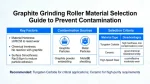
- The grinding hammer heads are protected with alloy materials, featuring outstanding wear resistance, reducing metal contamination of products and ensuring material purity.
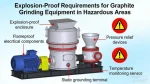
- Equipped with a professional collection system matched with system air volume and pressure, it operates under negative pressure with no dust leakage, meeting environmental protection requirements.
- Specially designed with a high-air-volume cooling structure for the temperature requirements in pitch coke grinding, it avoids material deterioration caused by high temperature and guarantees grinding quality.
II. Technical Parameters of CSM280 Small Ultrafine Mechanical Grinder
With the model CSM280, the equipment is specially adapted for pitch coke and other materials. The specific technical parameters are as follows, which can meet grinding demands in different scenarios:
- Model: CSM280
- Grinding materials: Pitch coke (compatible with petroleum coke, graphite and other materials)
- Feed particle size: <3mm granules or 200~300 mesh powder from Raymond mill
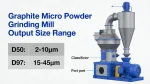
- Product particle size: 5μm ~75μm, flexibly adjustable according to requirements
- Capacity: >20kg/h
- Total system power: 16.24 Kw
- Operating power supply: 380V AC, 50Hz; 220V AC, 50Hz
III. Main Components and Parameters of CSM280 Ultrafine Mechanical Grinding System
The complete grinding system consists of 7 core components. The material, specification and parameters of each component are strictly controlled to ensure efficient and stable operation of the whole system. The specific components are as follows:
Item 1 Feeding Device (1 set)
- Material: 304 stainless steel
- Configuration: 1 hopper (volume approx. 10L), 1 electric discharge valve (power 0.37Kw, variable frequency adjustable feeding speed)
Item 2 CSM280 Mechanical Grinder (1 set)
- Main body material: 304 stainless steel
- Core configuration: 1 grinding motor (power 7.5Kw), 1 set of anti-static transmission belt, 1 set of tungsten-cobalt alloy hammer heads, 1 grinding gear ring, 1 set of imported SKF bearings, 1 stainless steel classifying impeller (processed per German technology), 1 classifying motor (power 2.2Kw, variable frequency speed regulation)
- Auxiliary configuration: 1 set of carbon steel support, matched maintenance ports, air-cooled structure design (with large air inlet)
Item 3 Cyclone Separator & Collector (1 set)
- Material: 304 stainless steel
- Feature: High-efficiency separation and collection structure, equipped with 1 electric rotary air lock discharge valve (power 0.37KW)
Item 4 MB20 Bag-type Pulse Dust Collector (1 set)
- Material: Carbon steel (wall thickness ≥3mm)
- Core parameters: Filtration area 20 square meters, automatic pulse cleaning, dust emission meeting national emission standards (<40mg/m³)
- Configuration: Including membrane valve, pressure bin, tube sheet, filter bags, solenoid valve and other functional components. Filter bags adopt coated polyester needle felt, equipped with 1 manual discharge valve
Item 5 Induced Draft Fan (1 set)
- Material: Carbon steel
- Configuration: Integrated support, manual air damper, flexible connection for shock absorption, motor power 5.5Kw, matched high-efficiency silencer
Item 6 Connecting Pipes and Supports (1 set)
- Material: Steel wire hoses for pipes in contact with materials, carbon steel for the rest
Item 7 Automatic Control Cabinet (1 set)
- Function: Real-time display of current, voltage, speed and other main parameters, including all necessary frequency converters, protectors, circuit breakers and other electrical components
- Advantages: Automatic interlock shutdown for faults, automatic alarm and display, safe operation interlock sequence, manual mode for single-unit operation of drivers during maintenance, light flow indication and abnormal flashing alarm, equipped with TAIDA frequency converter
IV. Equipment Manufacturing Requirements
To ensure equipment quality and operational safety, the equipment is manufactured in strict accordance with the following standards:
- Welding procedures are implemented in accordance with ASME Section IX standards, and welding machines meet ASME Section IX requirements.
- 100% nondestructive testing is required for welding of parts in contact with materials (including feeding hopper, grinder, collector, dust collector, etc.).
- 100% nondestructive testing is required for welding of lifting lugs.
- 10% sampling inspection is conducted for welding of other parts not in contact with materials.
- All inner wall gaps shall be smoothly full-welded with smooth transitions for easy cleaning and to avoid material residue.