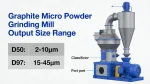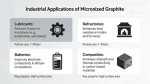
Micronized graphite (typically1-100 μm particle size, withd50 commonly 2-18 μm) is a versatile industrial material valued for its unique properties:self-lubrication,electrical/thermal conductivity,chemical stability,high-temperature resistance(up to 3200°C), andlithium intercalation capability. Below is a structured overview of its industrial applications:
🔋 Battery & Energy Storage Applications
-
Lithium-ion Battery Anodes(primary use)
- Preferred anode material due to layered structure enabling efficient lithium ion intercalation/deintercalation
- Enhancesenergy density,cycling stability, and mechanical strength of anodes
- Used in EVs, consumer electronics, and renewable energy storage systems
- High-purity grades (>99.9%) are critical for battery performance
-
Conductive Additives
- Improves electron transfer in battery electrodes and reduces internal resistance
- Used in alkaline, lead-acid, and solid-state batteries
-
Fuel Cells & Supercapacitors
- Bipolar plate material for hydrogen fuel cells (corrosion resistance, conductivity, durability)
- Enhances charge storage capacity in supercapacitors
⚙️ Lubrication & Tribology Applications
-
High-Performance Lubricants & Greases
- Operates effectively at extreme temperatures (>500°C) and pressures
- Particle size 4-5 μm minimizes abrasive wear
- Used in metalworking fluids, gear oils, and high-temperature industrial greases
-
Mold Release Agents
- Die-casting and forging processes (5-10% addition in aqueous solutions)
- Prevents metal adhesion to molds, improves surface finish, and extends tool life
- Foundry applications: core release and casting mold lubrication
-
Solid Lubricant Composites
- Blended with MoS₂, Pb, Sn, or Be for sintered friction materials
- Reduces friction in brake discs, internal couplings, and gears
- Enhances wear resistance in industrial machinery components
🧪 Composite Materials & Polymers
-
Plastics & Rubber Additives
- Improveswear resistance,compressive strength, andthermal conductivity
- Antistatic properties for electronic packaging and industrial parts
- Reduces coefficient of friction in moving components
- Typical addition level: 5-15% depending on application
-
Thermal Interface Materials
- Heat sinks and cooling systems for electronics
- Extruded polystyrene insulation boards for improved thermal performance
- Thermal management in LED lighting and power electronics
-
Carbon-Carbon Composites
- Aerospace and high-temperature applications requiring strength and thermal stability
- Reinforcement material in brake pads and clutch components
🎨 Coatings & Surface Treatments
-
Conductive Coatings
- Antistatic and EMI/RFI shielding for electronics, automotive, and construction
- Conductive paints and inks for printed circuit boards and capacitors
- Electrostatic discharge (ESD) protection in manufacturing environments
-
Corrosion Protection
- Oil and gas industry: protective coatings for pipelines and processing equipment
- Chemical processing: tanks, valves, and heat exchanger linings
- Enhances resistance to acids, alkalis, and harsh industrial chemicals
-
Refractory Coatings
- High-temperature furnace linings and crucibles
- Minimizes heat loss and protects underlying structures from thermal damage
🏭 Metallurgy & Foundry Applications
-
Recarburization Agent
- Steelmaking: adjusts carbon content in molten metal to achieve desired properties
- Improves hardness, strength, and machinability of steel products
-
Powder Metallurgy
- Binder and lubricant in metal powder compaction processes
- Enhances sintering properties and reduces porosity in finished parts
-
Welding Applications
- Additive in welding fluxes and electrodes for arc stability
- Prevents oxidation and improves weld quality
📡 Electrical & Electronic Applications
-
Carbon Brushes
- Critical component in electric motors, generators, and power tools
- Provides low-resistance contact between stationary and rotating parts
-
Electrical Components
- Carbon film resistors and conductive dry molds
- Formulation of conductive pastes for electronic assembly
- Current collectors in energy storage devices
🏗️ Other Industrial Uses
| Industry | Application | Key Benefits |
|---|---|---|
| Chemical Catalysis | Fertilizer industry catalyst production (脱模润滑剂) | Prevents catalyst adhesion to reactors |
| Construction | Roofing materials, extruded insulation | Thermal stability, weather resistance |
| Pigments & Inks | Black pigment for industrial coatings and printing | High opacity, chemical inertness |
| Ceramics | Refractory brick production | High-temperature stability, low thermal expansion |
Key Considerations for Application Selection
- Particle Size: Finer particles (1-5 μm) for batteries and electronics; coarser grades (20-100 μm) for lubricants and metallurgy
- Purity: >99.9% for batteries; 95-99% for general industrial uses
- Surface Treatment: May be required for specific composite applications to improve dispersion and adhesion
Micronized graphite continues to expand its industrial footprint, particularly inelectric vehicle batteries,advanced composites, andhigh-temperature lubrication systems, where its unique combination of properties provides unmatched performance benefits.