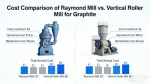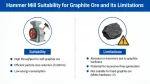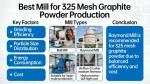
For 325 mesh graphite powder production (≈44μm), the best mill depends on your production scale, budget, and quality requirements. Here’s a structured recommendation to help you choose:
Top 3 Mills for 325 Mesh Graphite Powder
1. Raymond Mill (Best for Small to Medium-Scale, Cost-Sensitive Applications)
- Ideal Scenario: Production capacity 0.4-35 TPH, low investment budget, basic 325 mesh quality needs
- Advantages:
- Economical: Lowest initial investment among options
- Proven Technology: Mature, reliable, easy to maintain
- Directly Targeted: Specifically designed for 80-325 mesh range
- Low Energy Consumption: For basic 325 mesh output
- Limitations:
- PSD Control: Wider particle size distribution compared to specialized mills
- Scalability: Less suitable for large-scale (50+ TPH) operations
- Upgrade Path: Limited for future ultra-fine grinding needs
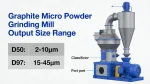
2. HGM Micro-Powder Mill (Best for Medium-Scale, Quality-Focused Production)
- Ideal Scenario: Production capacity 0.5-12 TPH, need for precise 325 mesh control, potential future upgrades to finer mesh
- Advantages:
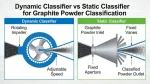
- Precision Classification: Forced turbine classifier ensures narrow PSD and consistent 325 mesh output
- Energy Efficient: 40% energy savings vs. traditional ball mills; 50-80 kW·h/ton
- Flexible Fineness: Adjustable from 325-2500 mesh for product diversification
- Graphite-Specific: Handles soft, flaky graphite without excessive particle damage
- Limitations:
- Higher Investment: More expensive than Raymond Mill
- Throughput: Lower than vertical roller mills for large-scale production
3. HLM Vertical Mill (Best for Large-Scale, High-Capacity Operations)
- Ideal Scenario: Production capacity tens to hundreds of TPH, continuous 24/7 operation, integrated drying needs
- Advantages:
- Massive Throughput: Highest capacity for 325 mesh graphite powder
- Integrated System: Combines grinding, drying, and classifying in one unit
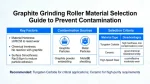
- Low Wear: Roller design minimizes contamination for high-purity graphite
- Cost-Effective at Scale: Lower operating costs per ton for large production volumes
- Limitations:
- High Capital Cost: Significant initial investment
- Overkill for Small Scale: Not economical for <5 TPH operations
Other Viable Options (Specialized Cases)
| Mill Type | Best For | Key Advantages | Limitations |
|---|---|---|---|
| Air Classifier Mill | Battery-grade graphite, ultra-pure requirements | No mechanical grinding parts, minimal contamination | Higher energy cost vs. mechanical mills |
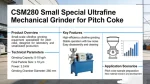
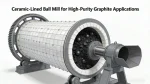
| Ball Mill with Classifier | Laboratory-scale or low-volume production | Low cost, simple operation, ultra-low contamination with ceramic liners | Low efficiency, long grinding times, high energy consumption |
| Turbo Mill | Heat-sensitive graphite applications | Dust-free operation, gentle grinding for flaky graphite | Lower capacity, higher wear compared to HGM mills |
Final Recommendation Matrix
| Production Scale | Budget | Quality Requirement | Best Mill Choice |
|---|---|---|---|
| Small (0.4-5 TPH) | Limited | Basic 325 mesh | Raymond Mill |
| Medium (5-50 TPH) | Moderate | Precise 325 mesh, future upgrades | HGM Micro-Powder Mill |
| Large (50+ TPH) | Ample | High-volume, consistent quality | HLM Vertical Mill |
| Any Scale | High | Ultra-pure, battery-grade graphite | Air Classifier Mill |
Key Considerations for Graphite Grinding
- Material Properties: Graphite is soft (Mohs 1-2), flaky, and conductive—avoid mills with excessive shear that can damage particle structure
- Contamination Risk: Use ceramic liners/grinding media for high-purity applications
- Energy Efficiency: HGM and vertical mills offer 30-40% savings vs. ball mills
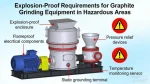
- Environmental Impact: Modern mills integrate pulse dust collectors for dust-free operation
For most industrial applications requiring 325 mesh graphite powder, the HGM Micro-Powder Mill strikes the best balance of precision, efficiency, and flexibility. For cost-sensitive small-scale operations, the Raymond Mill remains a reliable choice, while HLM Vertical Mills dominate large-scale production with unmatched throughput and integrated functionality.