Pin Mill Depolymerization System
How It Works
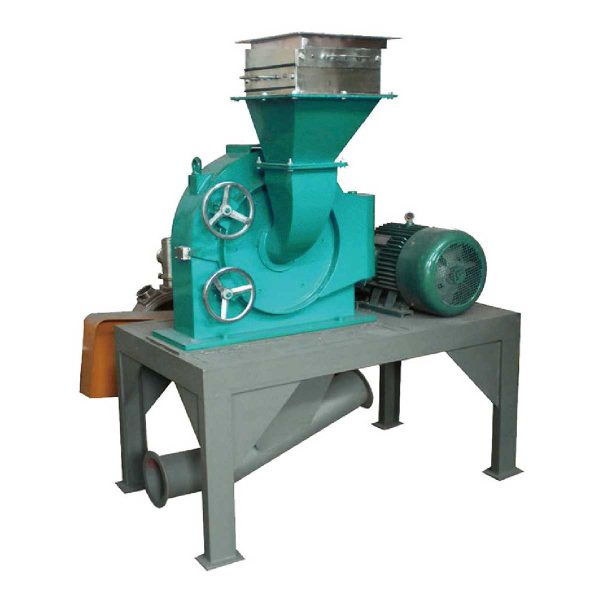
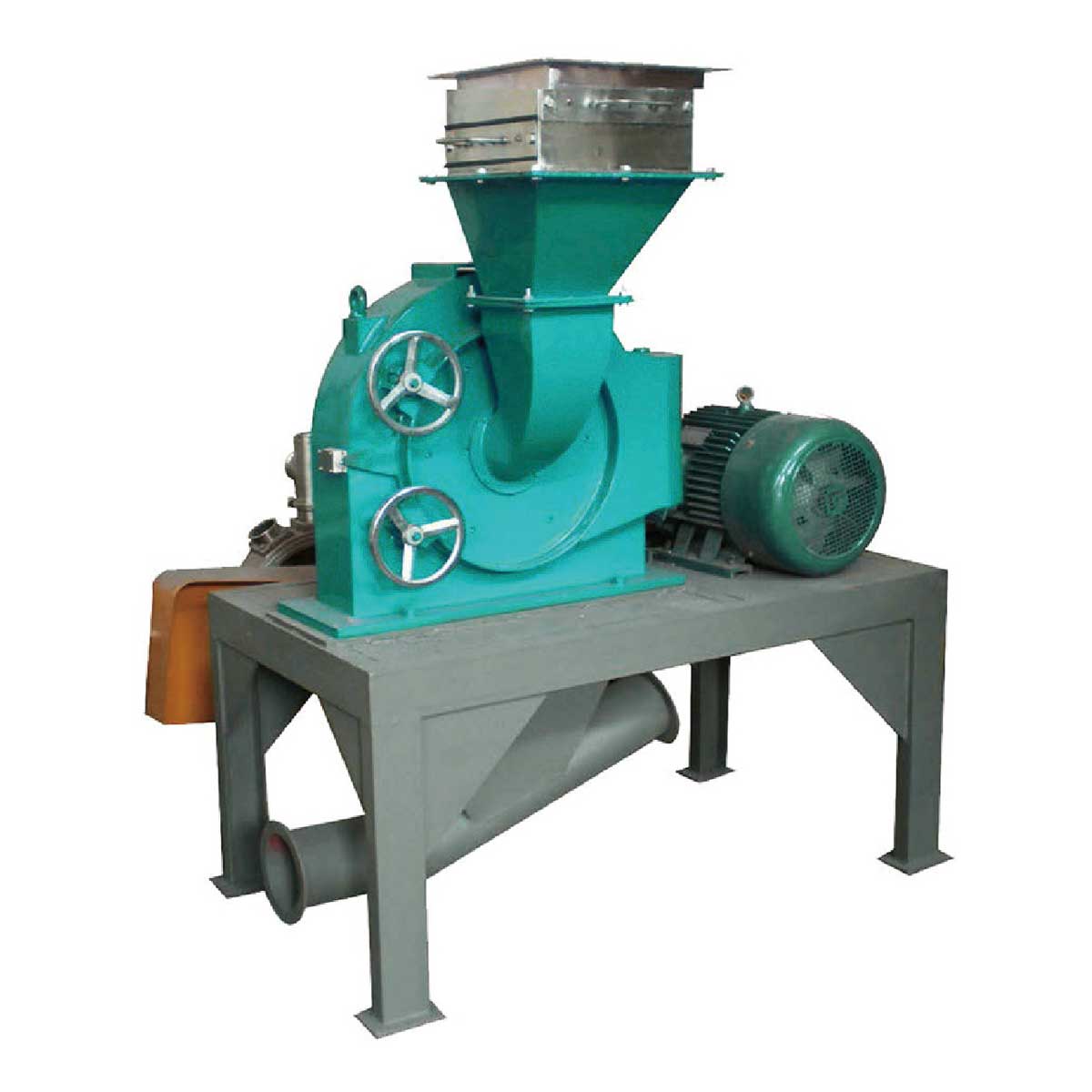
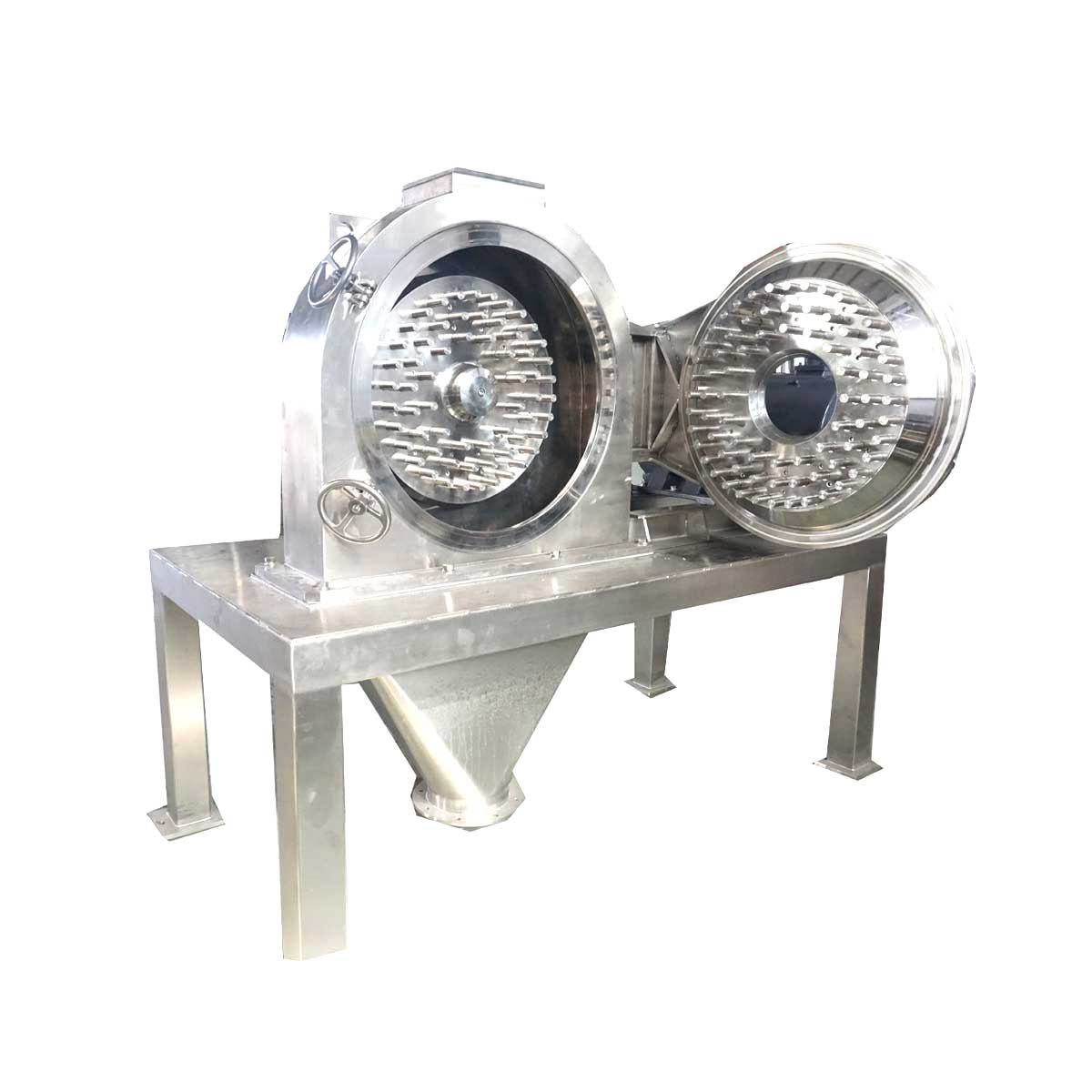
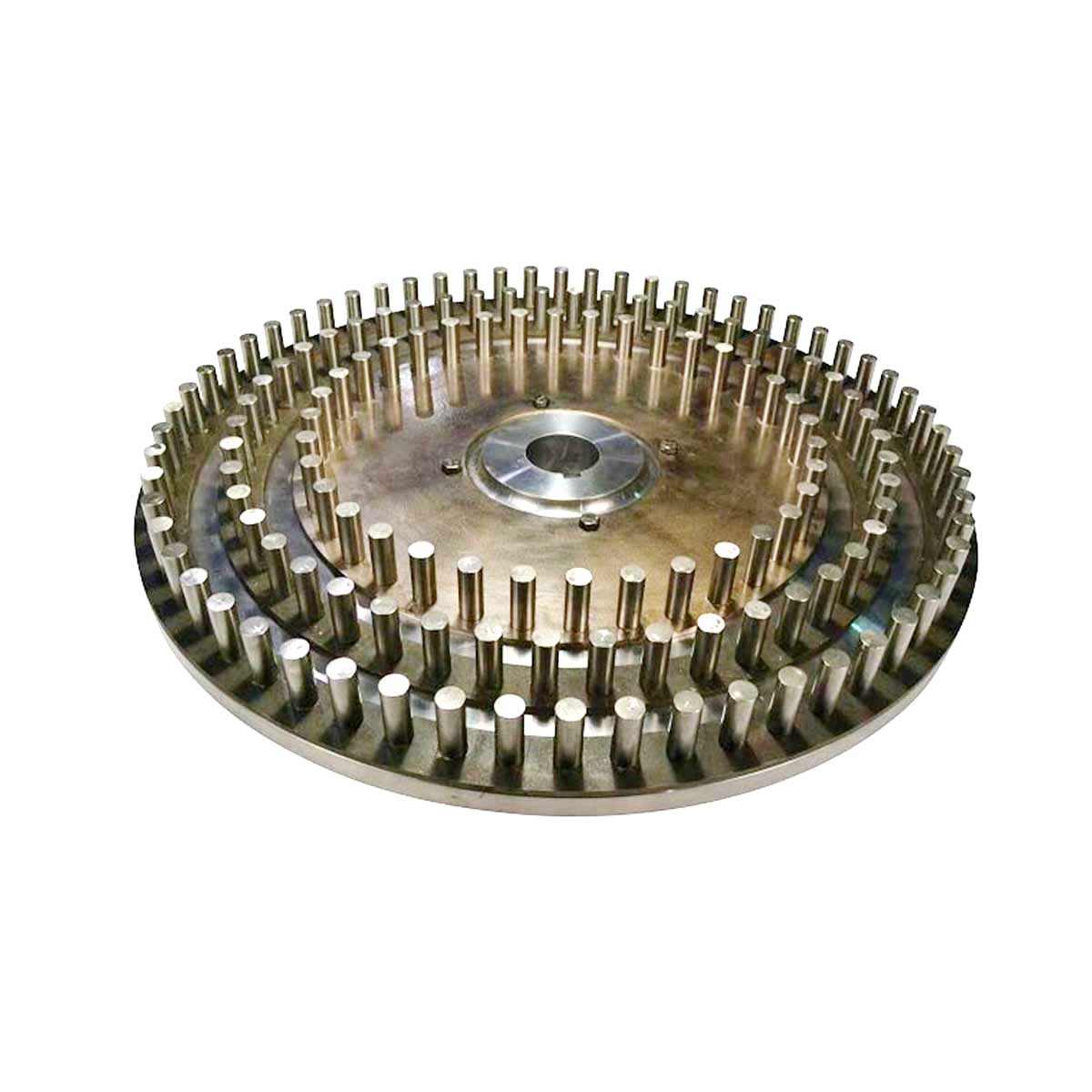
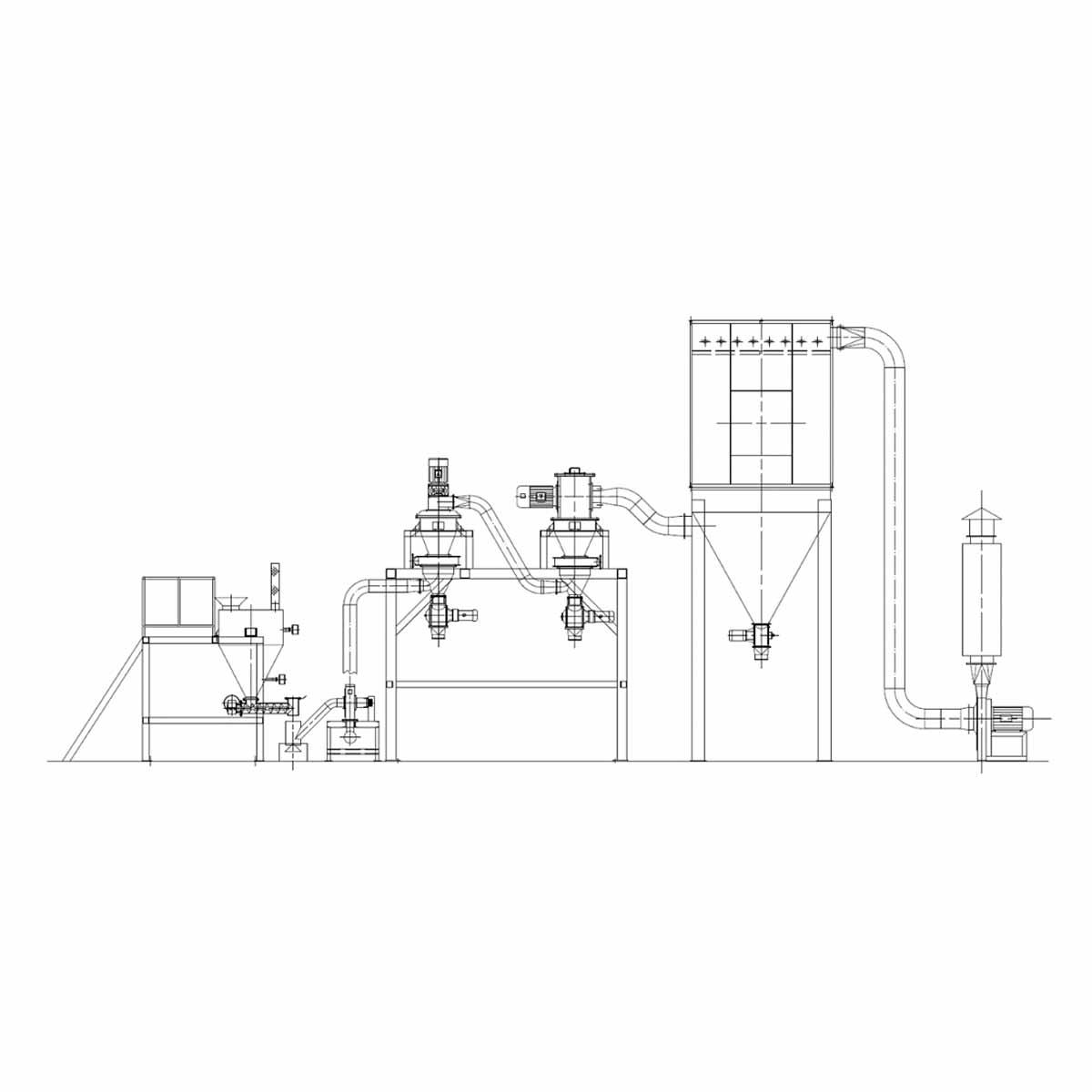
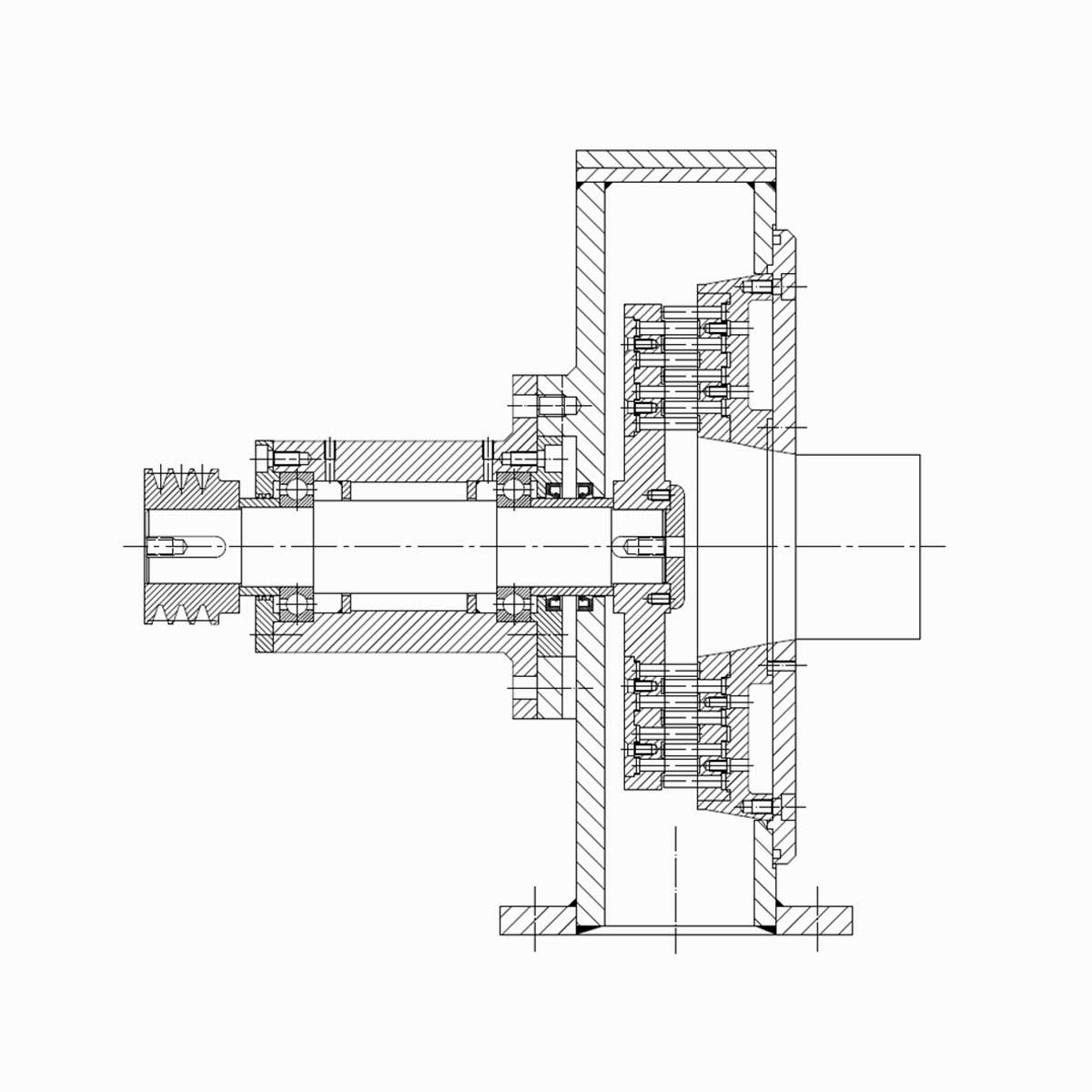
After being fed into the grinding chamber by the feeding device, the materials are accelerated synchronously with the high-speed rotating turntable and move outward under the action of centrifugal force. During the process, they collide violently with the pin rods on the turntable and the static disc to realize grinding, with the grinding intensity increasing toward the outer circumference. Both the turntable and the static disc are equipped with three layers of pin rod rings, ensuring the materials undergo sufficient and uniform grinding, and guaranteeing a finer discharge fineness and a regular particle size distribution. The complete system consists of a pin rod mill, a two-stage classifier, a dust collector and an induced draft fan. The pin rod mill accurately controls the D50 index; the first-stage classification removes large particles to meet the D90 requirement, with coarse particles being able to flow back for further deagglomeration; the second-stage classification removes fine powder to ensure the D10 index.
The system is equipped with three independent discharge outlets: the first-stage classification discharges coarse particles, the second-stage classification outputs finished products, and the dust collector collects micro-powder. The classified discharging is accurate and efficient, meeting the refined requirements for the deagglomeration processing of anode materials.
Performance Features
Integrated Grinding to Prevent Clumping
Equipped with specialized pins and teeth, the system achieves efficient grinding and deep deagglomeration. It effectively breaks down fine clusters, reducing clumping risks while enhancing powder fluidity, dispersibility, and overall usability.
High-Efficiency Grinding and Strong Performance
The innovative twin-disc design supports both counter-rotating and static-rotating modes. High-speed relative motion generates intense shear and grinding forces, shortening cycles and outperforming traditional mills to boost factory capacity.
Flexible and Adjustable Technical Parameters
Users can easily adjust core technical parameters, such as the differential disc speed and precision grinding gaps. This flexibility provides a solid foundation for precise particle size control and meets a wide range of diverse processing needs.
Precise Size Control and Superior Uniformity
The system grinds materials accurately within the 20-100 micron range. The final powder features a narrow particle size distribution, meeting the strict consistency standards required for high-precision and demanding industrial applications.
Compact Structure and Simplified Maintenance
The space-saving layout features a screenless design to eliminate clogging. Core components like grinding discs and pins are easy to disassemble and reassemble, simplifying cleaning workflows and reducing long-term operational and labor costs.
Technical Parameters
| Model Series: JCUM-P Single Power | 160 | 250 | 360 | 500 | 630 | 800 | 1000 |
|---|---|---|---|---|---|---|---|
| Grinding disc diameter (mm) | 160 | 260 | 360 | 520 | 630 | 730 | 1000 |
| Maximum speed (r/min) | 12000 | 7500 | 5550 | 3850 | 3200 | 2800 | 2250 |
| Power (kW) | 4 | 7.5 | 15~22 | 37 | 45~55 | 55~75 | 75~110 |
| Particle size (mesh) | 20~325 | 20~325 | 20~325 | 20~325 | 20~325 | 20~325 | 20~325 |
| Output (kg/h) | 20~200 | 35~1000 | 50~2000 | 75~3000 | 100~5000 | 200~10000 | 350~15000 |
| Model Series: JCUM-P Dual Power | 250 | 360 | 500 | 630 | 800 | 1000 |
|---|---|---|---|---|---|---|
| Grinding disc diameter (mm) | 250 | 400 | 500 | 630 | 800 | 1000 |
| Maximum speed on Case side (r/min) | 8000 | 5200 | 4200 | 3300 | 2800 | 2250 |
| Maximum speed on Door side (r/min) | 4500 | 4000 | 3600 | 3000 | 2500 | 2000 |
| Case side Power (kW) | 11 | 37 | 45 | 55 | 90~110 | 132~160 |
| Door side Power (kW) | 7.5 | 22 | 30 | 55 | 90~110 | 132~160 |
| Particle size (mesh) | 20~120 | 20~120 | 20~120 | 20~120 | 20~120 | 20~120 |
| Output (kg/h) | 100~600 | 200~1000 | 400~2000 | 1000~5000 | 2000~8000 | 3000~12000 |
