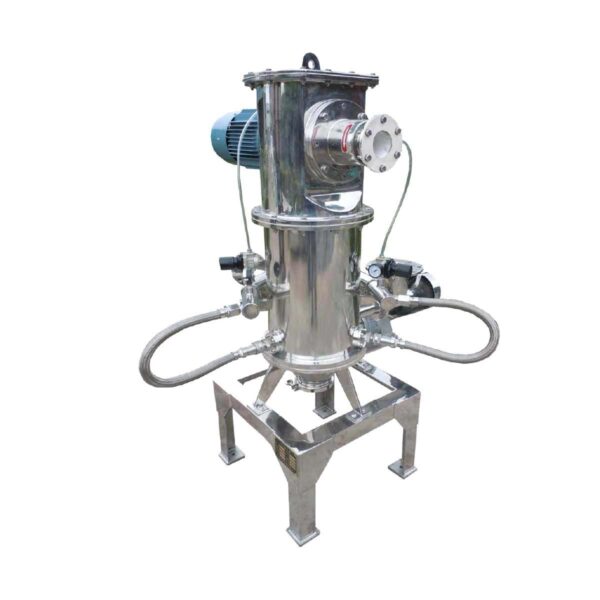
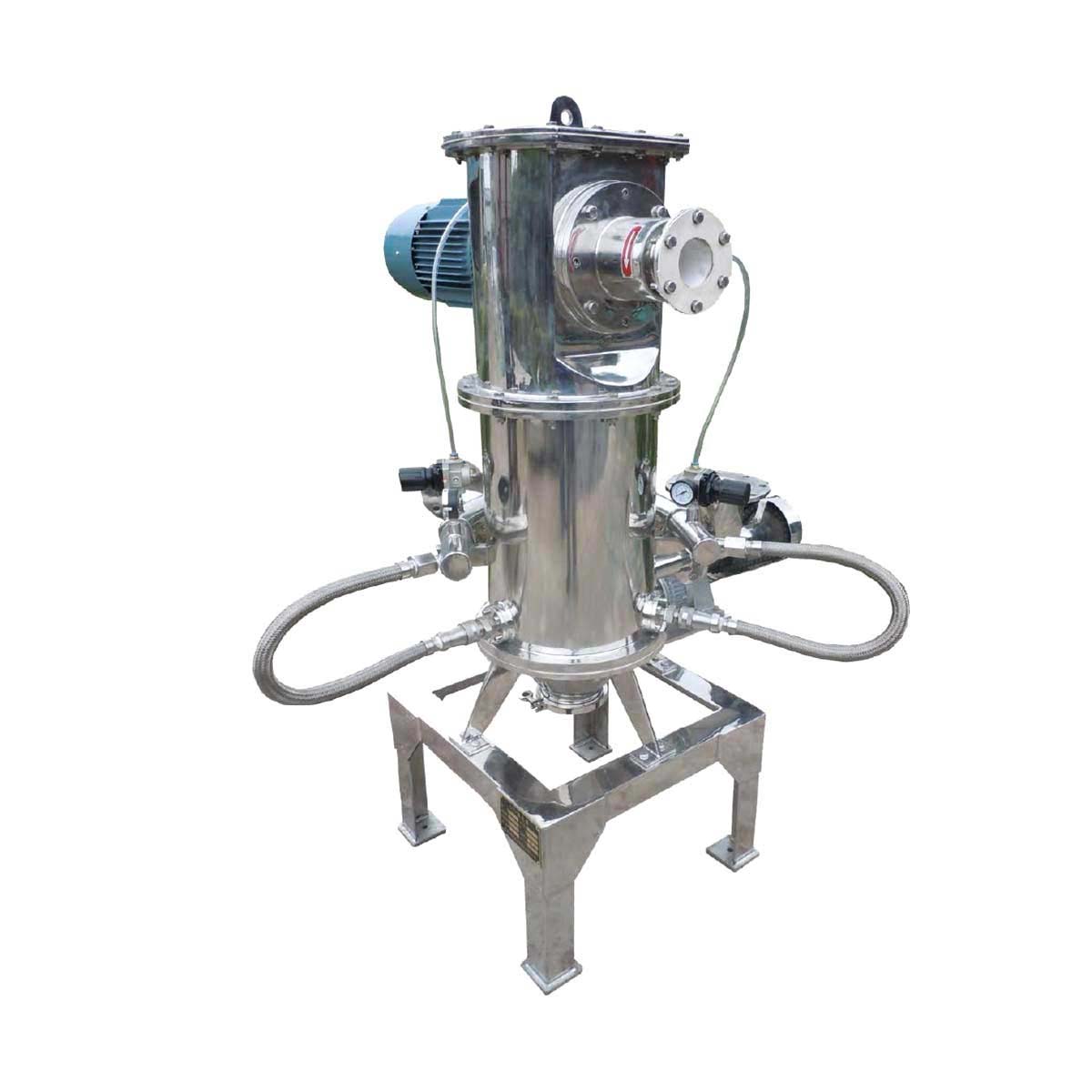
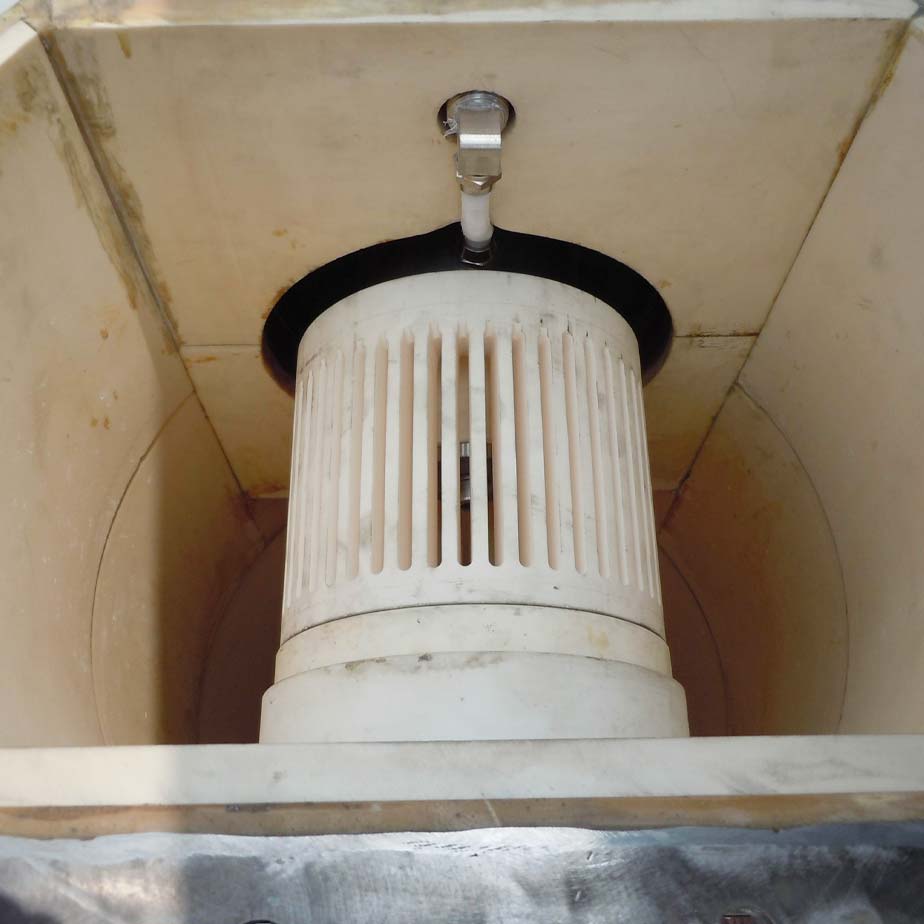
Fluidized Bed Opposed Jet Mill
How It Works
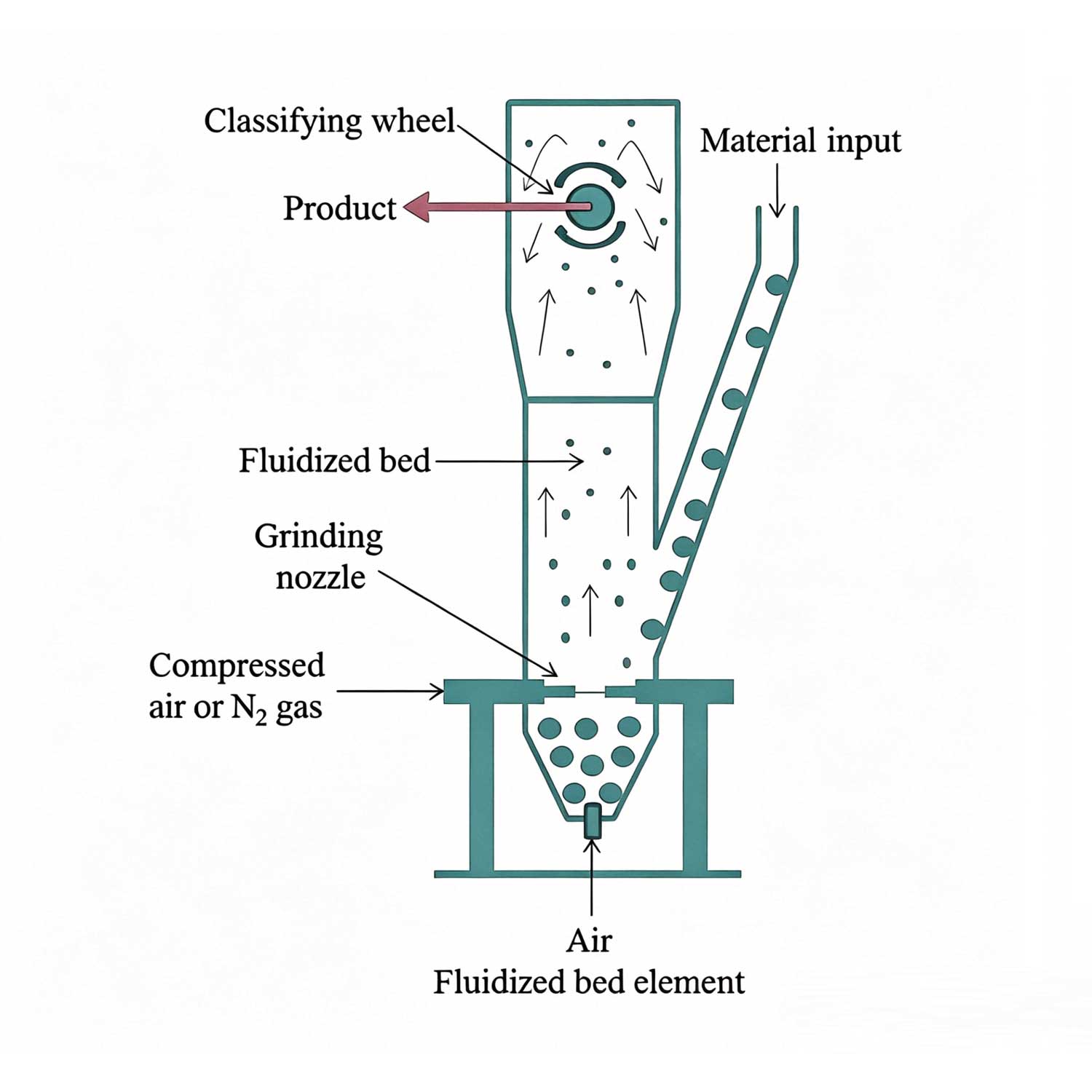
In a jet mill, the grinding gas (usually compressed air) is fed into the grinding chamber through special nozzles and accelerated so strongly that the particles are entrained. In the process, the particles repeatedly collide with each other and are thus comminuted. A big advantage of this type of mill: because there are no mechanical grinding tools with which the particles come into contact, there is no wear. This is why jet mills are excellent for very hard materials or materials that have to be as pure as possible. In a downstream cyclone separator or dust filter, the finely ground material is separated from the grinding gas.
Performance Features
Ultra-Fine Fineness, Precise and Practical Particle Size
The product achieves an ultra-fine fineness of D97=1~4μm, with a narrow and uniform particle size distribution and no excessive large particles. This feature accurately meets the requirements of high-end precision processing scenarios, eliminates subsequent screening processes, and ensures the quality stability of end products.
High-Efficiency Grinding, Significant Energy-Saving Advantage
Boasting industry-leading grinding efficiency and excellent energy consumption control, it saves 30~50% more energy compared to other types of jet mills. It significantly reduces power consumption during production, and long-term operation can greatly lower the comprehensive operating costs of enterprises.
Low Wear & Pollution-Free, Wide Adaptability
The material processing path avoids nozzles, greatly reducing the wear of vulnerable parts and minimizing product contamination risks. It can stably produce iron-free pollution powder and process high-hardness materials with a Mohs hardness of 9~10, adapting to processing needs across multiple industries.
Compact Structure, Intelligent & Convenient Operation
With a compact structural design, the equipment occupies little production space and operates at low noise, creating a comfortable working environment. The full automatic operation mode reduces manual intervention, lowers operational difficulty and labor costs, and improves overall production efficiency.
Technical Parameters
| Model Series: JFJM | 60 | 140 | 200 | 315 | 400 | 500 |
|---|---|---|---|---|---|---|
| Particle size (μm) | 1~50 | 2~50 | 2~50 | 3~50 | 4~50 | 4~50 |
| Diameter (mm) | 60 | 140 | 200 | 315 | 400 | 260×3 |
| Power (kW) | 1.1 | 4 | 5.5 | 15 | 22 | 7.5×3 |
| Maximum speed (r/min) | 18000 | 9800 | 6500 | 4000 | 3250 | 5000 |
| Output (kg/h) | 2~20 | 20~250 | 40~600 | 100~1500 | 250~2200 | 200~3000 |
| Compressed air consumption (m³/min) | 3 | 10 | 20 | 40 | 60 | 80 |
| Compressed air pressure (MPa) | 0.7~1.0 | 0.7~1.0 | 0.7~1.0 | 0.7~1.0 | 0.7~1.0 | 0.7~1.0 |
| Total power (kW) | 30 | 90 | 150 | 280 | 380 | 500 |
